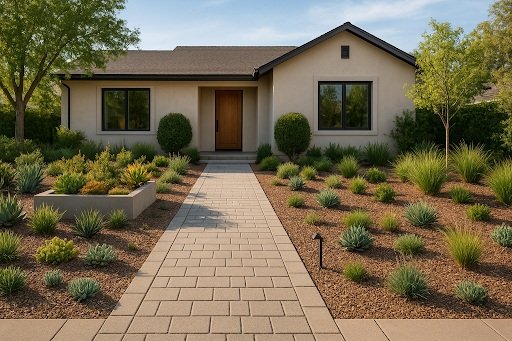
A beautiful front yard does more than improve appearances — it sets the tone for your entire home. Whether you’re trying to attract buyers, impress guests, or simply enjoy a more welcoming space each day, the right landscaping choices can transform even the simplest property into something memorable.
This guide brings you 21 practical, modern, and budget-friendly front yard landscaping ideas that work well for 2025 trends, small spaces, low-maintenance yards, and the front of any house style — from traditional to contemporary.
It combines expert landscaping design principles with easy-to-understand, real-world advice. If you’re looking for simple front yard landscapes or more structural landscaping design for the front yard, you’ll find everything here.
To ensure this guide is genuinely useful, every idea includes why it works, how to implement it, cost considerations, and pro tips.
Why Front Yard Landscaping Matters in 2025
Front yard landscaping trends have shifted over the past few years. What used to be “grass + a few plants” has now evolved into eco-friendly, drought-resistant, low-maintenance, and design-forward landscapes.
Homeowners today want:
- Lower water usage
- Less maintenance
- Better functionality
- Stylish curb appeal
- Climate-smart landscaping
- Affordable improvements that offer lasting value
Plus, a well-designed front yard can increase home value by 7–15% according to several real estate insights.
Whether you’re searching for easy landscaping ideas for the front of the house, small space solutions, or complete landscaping design for a front yard makeover — this master guide will help you create a yard that works beautifully year-round.
Front Yard Landscaping Ideas for 2025
(Each idea is expanded, practical, and includes expert insights.)
1. Create Permeable Pathways
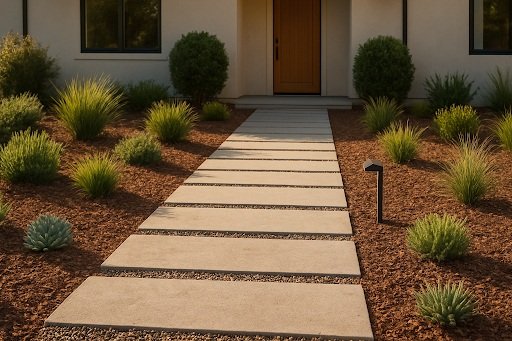
Replacing traditional concrete walkways with permeable pathways is one of the most effective upgrades for 2025. Permeable pathways allow rainwater to soak into the soil instead of creating puddles, cracks, or runoff.
Why It Works
- Enhances curb appeal instantly
- Prevents cracks common in concrete
- Reduces water pooling
- Eco-friendly and long-lasting
Materials to Consider
- Brick pavers
- Gravel with stepping stones
- Decomposed granite
- Permeable paver blocks
Implementation Tip
Compact sand underneath for stability and water drainage. For a more modern aesthetic, mix gravel with large square pavers — perfect for simple front yard landscapes.
2. Add Natural Stonework
Stonework adds structure, durability, and visual weight to the front of your house. Whether it’s a stone wall, raised edge, or steps, stone adds timeless charm.
Where to Use Stone
- Retaining walls
- Flower bed borders
- Walkway edges
- Front porch steps
- Rock seating areas
Why It Works
- Fits modern, rustic, and traditional homes
- Extremely durable
- Adds instant character
If you’re doing major stonework (like steps or walls), consider hiring professionals for safety and longevity. For decorative borders, you can DIY easily.
3. Plan Your Microclimates
Your front yard is not one single environment — it has microclimates. Some spots stay shady, others get full sun, and others may stay damp.
Common Microclimates
- Under large trees → shade
- Near pavement → heat zones
- Corners with downspout runoff → moist areas
- South-facing spots → intense sunlight
Why Understanding Microclimates Matters
Choosing plants based on real conditions reduces maintenance, saves money, and improves plant survival.
Pro Tip
Use shade-loving plants where sunlight is low, and heat-tolerant plants near driveways or walkways.
4. Build Raised Flower Beds
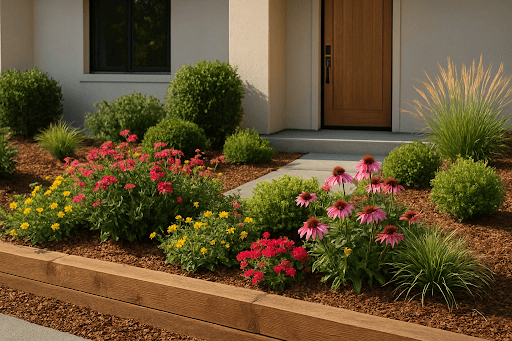
Raised beds add dimension and structure — especially in smaller front yards where you want maximum visual impact.
Benefits
- Clear separation of spaces
- Better soil control
- Easier maintenance
- More visually dynamic
Pair raised beds with stone, wood, or metal edging for a modern touch.
Planting Ideas
- Seasonal flowers
- Compact shrubs
- Herbs (for a functional twist)
- Climbing vines along a trellis behind the beds
5. Turn the Front Yard into a Social Space
If you enjoy hosting or connecting with neighbors, your front yard can be more than something you walk past.
Ideas to Try
- Add a small seating area
- Install a fire pit
- Use privacy shrubs
- Hang string lights
- Include shade trees or umbrellas
Not everyone wants to be fully visible — low canopy trees, tall grasses, or shrubs can create privacy without closing off the yard.
6. Choose Low-Maintenance Succulents
Succulents are ideal for sunny, dry climates — and they offer bold shapes, unique textures, and year-round interest.
Why Succulents Work
- Low water needs
- Low maintenance
- Thrive in heat
- Great for modern front yard designs
Where to Use Them
- Along pathways
- In raised beds
- In clusters near your entry
- In decorative pots for a modern touch
If your area experiences harsh winters, plant succulents in pots so you can move them indoors.
7. Design for All Seasons
A beautiful front yard should not look good only in spring. You want year-round curb appeal.
Plants for All Seasons
- Evergreens for winter
- Perennials for spring
- Annuals for summer color
- Ornamental grasses for fall texture
Why It Works
Seasonal landscaping creates depth and constant interest, making your front yard visually appealing no matter the month.
8. Add a Defined Entryway
Your entryway is the focal point of your home. Enhancing it can elevate the entire front yard.
Ideas
- Widen the walkway leading to the door
- Add structured shrubs on either side
- Use contrasting plants for framing
- Include pathway lighting
- Add a modern front porch railing
A defined entry helps guide the eye naturally toward your home — a key design principle in modern landscaping.
9. Use Modern Mulch Design
Mulch is more than just a plant accessory. Modern mulch designs can help define spaces and add contrast.
Benefits
- Retains soil moisture
- Reduces weeds
- Boosts visual appeal
- Works well with low-maintenance landscapes
Types of Mulch
- Wood chips
- Colored bark mulch
- Decorative gravel
- Rubber mulch
Gravel mulch pairs beautifully with succulents and drought-tolerant plants.
10. Incorporate Native Plants
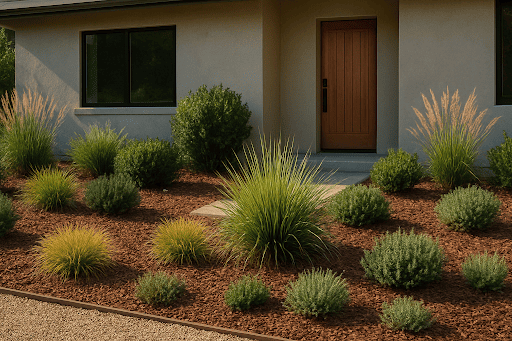
Native plants are naturally adapted to your climate — meaning less watering, fewer pests, and reduced maintenance.
Benefits
- Eco-friendly
- Attract bees and butterflies
- Low maintenance
- Disease-resistant
If you’re designing a long-lasting, sustainable front yard, native plants are one of the smartest choices.
11. Add Ornamental Grasses
Ornamental grasses are the backbone of many modern front yard designs.
Why They’re Popular
- Soft movement in the wind
- Minimal watering
- Low maintenance
- Works in rock gardens, borders, and beds
Grasses like Fountain Grass, Maiden Grass, and Blue Fescue add texture and height variation.
12. Install Solar Landscape Lighting
Solar lights extend your curb appeal into the evening without any wiring or electricity.
Best Uses
- Pathway lighting
- Uplighting shrubs or trees
- Highlighting house walls
- Framing the driveway
Solar lighting is essential in creating a warm, inviting atmosphere.
13. Create a Rock Garden
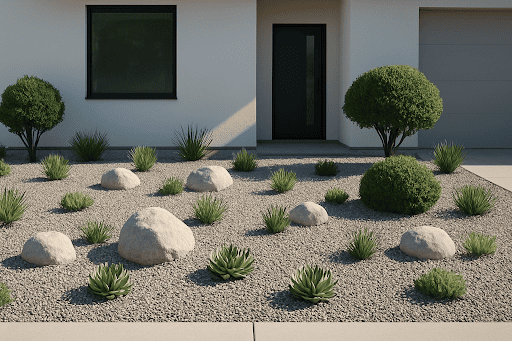
Rock gardens are increasing in popularity, especially for no-grass or low-maintenance front yards.
Why Rock Gardens Work
- Drought-friendly
- Modern look
- Great with succulents
- Very low maintenance
Use a mix of stones, gravel, and drought-friendly plants for a clean, structured design.
14. Add Symmetry to the Front of the House
Symmetry is one of the oldest landscaping principles — and still one of the most effective for boosting curb appeal.
Examples
- Matching plants on both sides of the entry
- Balanced shrubs or pots
- Repeating colors or shapes
Symmetry creates a professional, elegant appearance with minimal effort.
15. Build a Simple Water Feature
A small fountain or bubbling rock can add movement and sound to your front yard.
Why It Works
- Increases curb appeal
- Attracts birds
- Creates soothing sounds
- Works in both small and large yards
Smaller, self-contained fountains are affordable and easy to install.
16. Use Edging for a Clean Look
Edging creates crisp borders between different parts of your yard — beds, pathways, lawn, and gravel.
Types of Edging
- Brick
- Stone
- Metal
- Plastic
- Wood
Defined edges make your front yard look tidy and professionally designed.
17. Add Potted Plant Clusters
Potted plants give you flexibility and instant color.
Why They Work
- Perfect for entryways
- Easy to replace seasonally
- Great for renters
- Low commitment
Mix pot sizes, colors, and heights for visual interest.
18. Try a Minimalist, Low-Water Front Yard
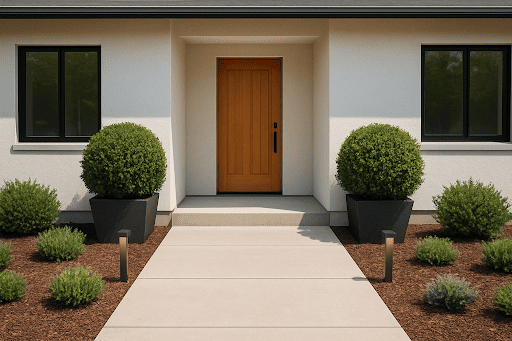
Minimalist landscaping design for the front yard is trending for 2025 — especially in dry climates.
Elements
- Gravel beds
- Large pavers
- Succulents
- Sparse, sculptural plants
- Clean lines
This design style is modern, affordable, and extremely low maintenance.
19. Install a Small Seating Nook
If you prefer a welcoming front yard, create a small seating corner with:
- A bench
- Bistro chairs
- Stone stool seating
- A tiny pergola
Add plants around it for a cozy retreat.
20. Add Vertical Landscaping
For small front yards, vertical elements can expand the usable design area.
Ideas
- Trellises
- Wall planters
- Climbing vines
- Narrow vertical shrubs
Vertical landscaping creates depth without taking up much space.
21. Refresh Your Lawn or Replace It Strategically
Traditional front lawns are still popular, but homeowners in 2025 prefer:
- Smaller lawns
- Partial lawn replacements
- Eco-friendly alternatives
Alternatives to Traditional Lawn
- Clover lawns
- Gravel landscapes
- Groundcovers like creeping thyme
If you prefer a lawn, overseed, improve soil, or reduce the lawn area to make maintenance easier.
Front Yard Landscaping Budget Guide (2025)
DIY Costs
- Mulch: $20–$40
- Gravel: $50–$100
- Plants: $5–$40 each
- Pavers: $1–$10 each
- Solar lights: $10–$40
Professional Costs
- Full front yard makeover: $3,500–$15,000
- Stonework: $2,000–$8,000
- Lawn replacement: $1,500–$4,000
- Pathway installation: $800–$5,000
Budgets vary by region, material, and design complexity.
Common Front Yard Landscaping Mistakes
Avoid these to save money and frustration:
- Planting without considering sunlight
- Overcrowding plants
- Ignoring soil quality
- Choosing water-thirsty plants in hot climates
- Not planning for seasonal changes
- Blocking windows with large shrubs
- Overcomplicating maintenance
Front Yard Landscaping for Small Spaces
Small front yards require strategic planning.
Best Ideas for Small Yards
- Vertical landscaping
- Raised beds
- Minimalist paver designs
- Compact trees
- Potted plant clusters
- Gravel pathways
- Edging for structure
Small yards can look bigger with simple patterns and clean lines.
Front Yard Landscaping FAQs
1. What is the cheapest way to landscape the front of the house?
Mulch, gravel, native plants, solar lights, and edging are the most affordable options that still create a big impact.
2. How can I landscape my front yard with no grass?
Use gravel, pavers, rock gardens, succulents, and native plants. Add ornamental grasses for height and texture.
3. How much does professional front yard landscaping cost in 2025?
Most homeowners spend between $3,500 and $15,000 depending on size and design.
4. How long does a front yard makeover take?
DIY projects can take 1–7 days. Professional full-yard transformations may take 2–6 weeks.
5. Do front yard improvements increase home value?
Yes! A well-designed front yard can increase home value by 7–15%.
6. What are good low-maintenance plants for the front yard?
Succulents, native plants, evergreen shrubs, ornamental grasses, and drought-tolerant perennials.
7. What is the best landscaping design for the front of the house?
A design that combines structure (pathways, edging), greenery (plants, shrubs), and focal points (entryway, lighting, symmetry).
Final Thoughts
Your front yard is the first chapter of your home’s story. Whether you prefer a lush, colorful garden or simple front yard landscapes that require minimal care, the right design choices can dramatically elevate your home’s curb appeal.
With these 21 modern, practical, and affordable front yard landscaping ideas, you can create a space that looks incredible, fits your climate, stays low maintenance, and works beautifully in every season.