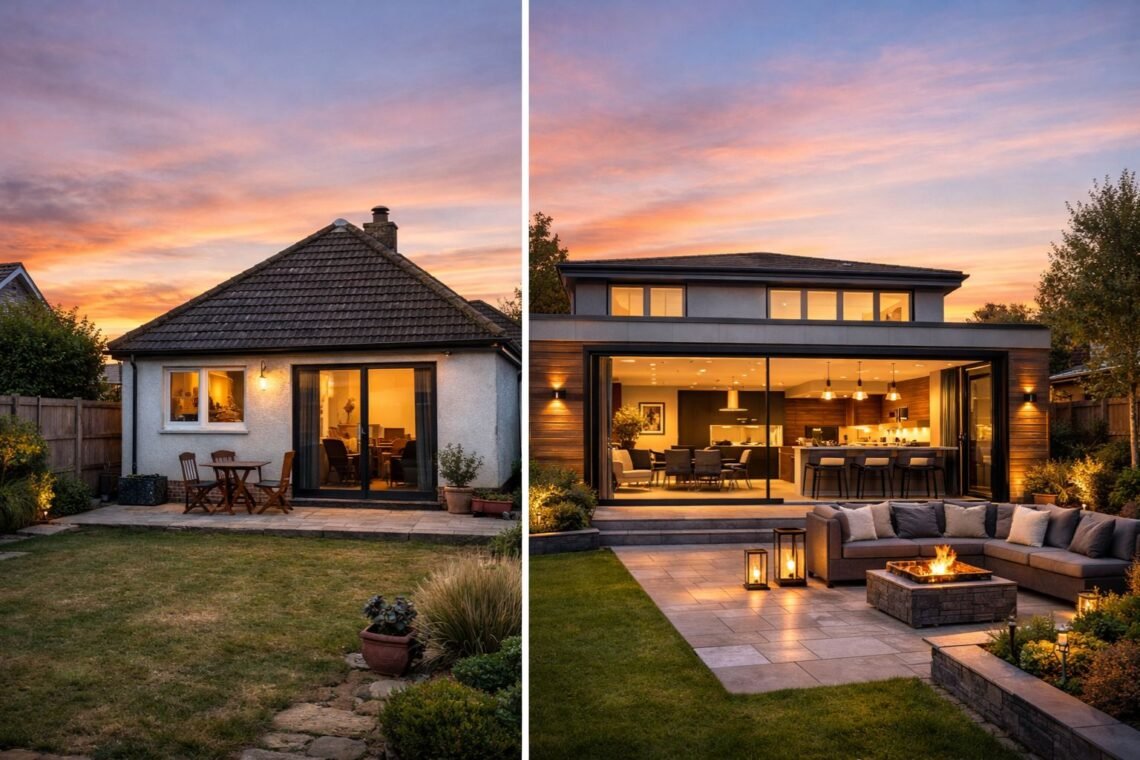
If your home suddenly feels smaller than it used to, you’re not alone.
Maybe your family has grown. Maybe you’re working remotely now. Maybe you just want a larger kitchen, a brighter living space, or a proper home office. Whatever the reason, the need for more space is one of the most common challenges homeowners face.
Moving is always an option — but between realtor fees, closing costs, higher mortgage rates, and relocation stress, upgrading to a bigger house can quickly become expensive.
That’s why more homeowners are choosing house extension ideas instead.
A well-planned extension can:
- Add usable square footage
- Improve natural lighting
- Increase property value
- Modernize your layout
- Adapt your home to changing needs
But here’s the key difference between a basic renovation and a high-value extension:
Smart planning.
In this complete 2026 guide, you’ll discover:
- 25 practical and modern house extension ideas
- Realistic house extension plans and layout examples
- Cost breakdowns (US-based estimates)
- Design inspiration for different home styles
- Permit and zoning considerations
- ROI insights to help you invest wisely
Whether you’re considering a rear extension, a second story, a loft conversion, or even a backyard studio, this guide will help you make the right decision for your space and budget.
Before You Start: How to Plan a House Extension the Right Way
Before choosing a design, you need to understand what type of extension works best for your property.
This is where many homeowners make mistakes — and where you can outperform most online guides.
1. Choosing the Right Type of House Extension
Not every extension works for every house. Your choice depends on:
Lot Size
- Large backyard → Rear or wraparound extension
- Narrow side yard → Side return extension
- Limited land → Vertical or loft extension
Home Structure
- Single-story home → Second-story addition possible
- Sloped roof → Dormer extension opportunity
- High ceilings → Mezzanine potential
Budget Range (General 2026 US Estimates)
- Small bump-out extension: $20,000–$50,000
- Rear single-story extension: $60,000–$150,000
- Two-story extension: $120,000–$300,000
- Basement extension: $100,000–$250,000
- Detached backyard studio (ADU-style): $80,000–$200,000
Costs vary by state, labor rates, materials, and structural complexity.
2. Do You Need a Permit for a House Extension?
In the United States, most structural house extensions require:
- Building permits
- Zoning compliance approval
- Structural review
- Electrical and plumbing inspections
Common permit triggers include:
- Expanding the home footprint
- Adding a second story
- Modifying load-bearing walls
- Changing roof structure
You must also check:
- Setback rules
- HOA regulations
- Maximum lot coverage limits
- Height restrictions
Skipping permits may result in:
- Fines
- Forced demolition
- Lower resale value
- Insurance issues
Always consult a licensed architect or contractor before starting.
3. How Much Value Does a House Extension Add?
A well-designed home extension design can increase property value by:
- 5–20% depending on type and location
High-ROI extensions:
- Kitchen expansion
- Additional bedroom
- Master suite
- Open-plan living area
- Income-generating ADU
Low ROI:
- Over-customized luxury additions
- Extensions that reduce backyard space too much
- Poorly integrated designs
The golden rule:
Build for functionality first, aesthetics second.
4. Build Out or Build Up? (Critical Decision)
Many homeowners ask:
Is it cheaper to build up or build out?
Build Out (Rear/Side Extension)
Pros:
- Simpler structure
- Easier access
- Often lower engineering cost
Cons:
- Reduces yard space
- Requires foundation work
Build Up (Second Story)
Pros:
- Keeps yard intact
- Doubles space potential
Cons:
- Structural reinforcement required
- Temporary relocation may be needed
Generally:
Building up costs more per square foot but maximizes land use.
25 House Extension Ideas (With Plans, Layout Examples & Design Inspiration)
Ground Floor Extensions (High Demand + Strong ROI)
These are the most popular house extension ideas in the US because they’re practical, functional, and add immediate resale value.
1. Rear Single-Story Extension (Open-Plan Transformation)
Best for: Growing families, kitchen upgrades, open living spaces
Average Cost (US 2026): $60,000–$150,000
ROI Potential: High (especially kitchen-focused layouts)
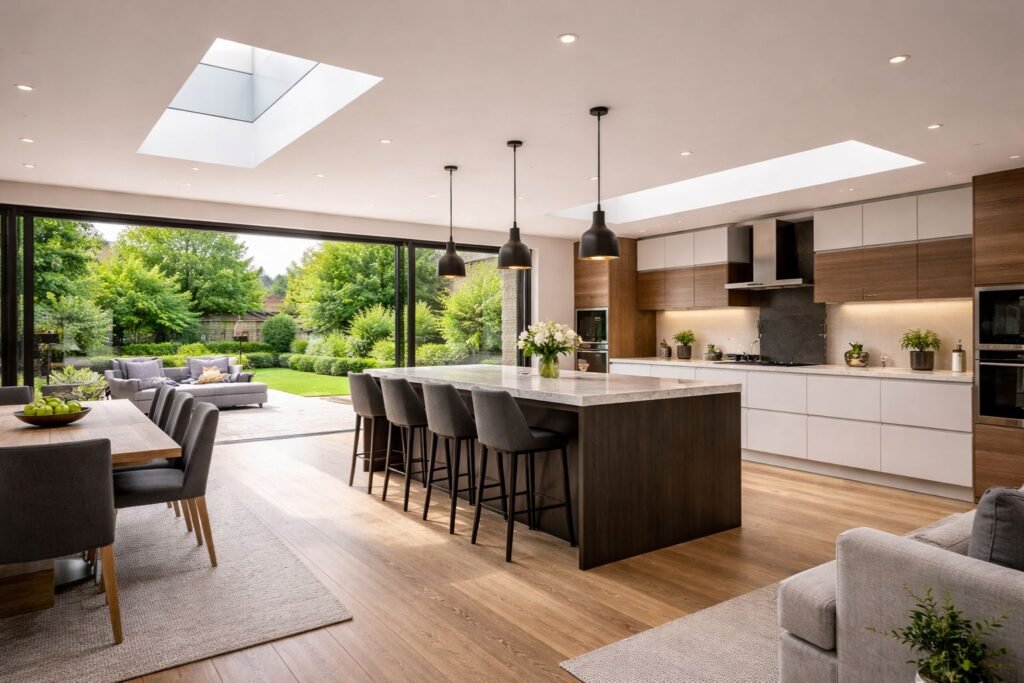
A rear extension expands the back of your house into your yard, typically creating a large open-plan kitchen-dining-living space.
Layout Plan Example:
- Remove rear wall (install steel beam)
- Extend 12–20 feet outward
- Create:
- Kitchen island in center
- Dining zone near sliding doors
- Living area toward original structure
Smart Design Tip:
Install full-height sliding or bi-fold glass doors to connect indoor and outdoor space.
Why this ranks high in value:
- Modern buyers prefer open layouts
- Maximizes natural light
- Improves daily usability
2. Wraparound Extension (Rear + Side Combo)
Best for: Corner homes or properties with side yard space
Average Cost: $120,000–$250,000
ROI Potential: Very High
A wraparound extension combines a rear extension with a side return extension, forming an “L-shape” around the original home.
Layout Plan Example:
- Side section = extended kitchen
- Rear section = dining + lounge
- Add rooflights above side return
- Include large sliding patio doors
This type of extension house plan allows:
- Separate functional zones
- Seamless indoor-outdoor flow
- Significant square footage gain
Pro Tip:
Use skylights in the side return to prevent the middle of the home from becoming dark.
3. Side Return Extension (Perfect for Narrow Homes)
Best for: Townhouses and urban properties
Average Cost: $50,000–$100,000
ROI Potential: Moderate to High
Many homes have a narrow alley or unused strip of land along the side. A side return extension encloses that area to widen the kitchen or dining room.
Layout Plan Example:
- Expand kitchen width by 3–6 feet
- Add skylights or glass roof
- Install long island parallel to new wall
- Reposition dining table near garden doors
Why it works:
- Low footprint increase
- Affordable compared to full rear extension
- Dramatically improves kitchen functionality
This is one of the smartest small house extension ideas for maximizing limited space.
4. Front Porch Extension (Entryway Upgrade)
Best for: Storage, curb appeal, insulation
Average Cost: $15,000–$40,000
ROI Potential: Moderate
A front porch extension may not add massive square footage, but it dramatically improves functionality.
Layout Plan Example:
- Add 6–8 feet enclosed porch
- Built-in bench storage
- Coat closet
- Double-door entry system
Benefits:
- Reduces heat loss
- Adds mudroom-style storage
- Improves exterior appearance
For colder US states, this extension improves energy efficiency.
5. Garage Conversion Extension
Best for: Extra bedroom, office, rental suite
Average Cost: $25,000–$75,000
ROI Potential: High (if bedroom added)
Instead of building outward, convert your attached garage into livable space.
Layout Plan Example:
Option A:
- Guest bedroom + closet
Option B:
- Home office + half bath
Option C:
- Studio apartment with separate entrance
Important:
- Insulate walls and ceiling
- Raise floor if needed
- Replace garage door with insulated wall + window
This is one of the most cost-effective home extension design strategies because the structure already exists.
Vertical & Double-Story Extensions (Maximum Space Gain)
These ideas add serious square footage without sacrificing yard space.
6. Two-Story Rear Extension
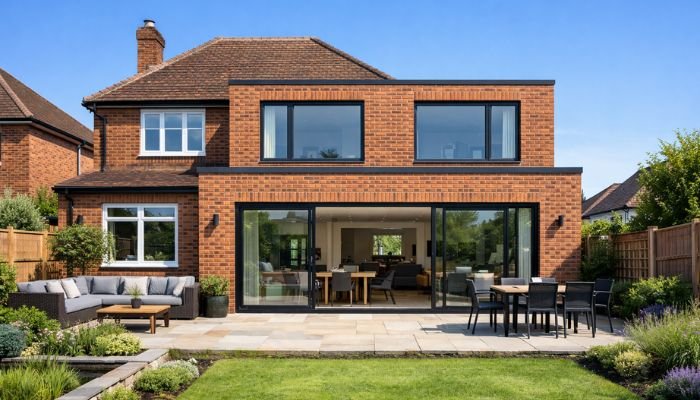
Best for: Families needing multiple bedrooms
Average Cost: $120,000–$300,000
ROI Potential: Very High
You extend both floors at the rear of your home.
Layout Plan Example:
Ground Floor:
- Expanded kitchen + dining
Upper Floor:
- New bedroom + bathroom
Stair Placement Strategy:
- Extend hallway toward rear
- Stack plumbing lines vertically for cost efficiency
Why this works:
- Doubles space impact
- Strong resale appeal
- Efficient plumbing routing reduces cost
7. Adding a Full Second Story
Best for: Small footprint homes
Average Cost: $150,000–$400,000
ROI Potential: Very High (if well-designed)
If your home is single-story, building upward can nearly double your square footage.
Structural Considerations:
- Foundation load capacity
- Reinforced framing
- Temporary roof removal
Layout Plan Example:
Upstairs:
- 2 bedrooms
- 1 bathroom
- Small landing area
Downstairs:
- Keep main living functions
This approach is common in high-cost housing markets where land is limited.
8. Above-Garage Master Suite
Best for: Adding a private primary suite
Average Cost: $80,000–$180,000
ROI Potential: High
If you have an attached garage, you can build above it.
Layout Plan Example:
- Bedroom facing backyard
- Walk-in closet behind stair
- Ensuite bathroom at rear
- Optional balcony
This is one of the smartest house extension plans for privacy without major structural disruption.
Now we move into high-demand vertical, roof, basement, and flexible living extensions — areas where most competitors stay shallow.
Loft & Roof Extensions (Smart Vertical Expansion)
These are ideal when you want to expand without sacrificing yard space.
9. Dormer Loft Extension
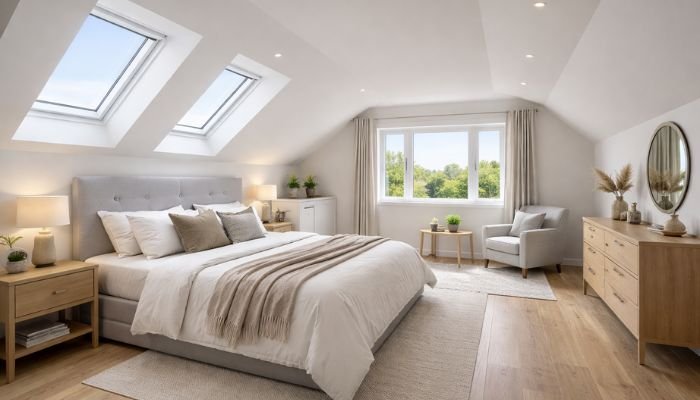
Best for: Adding a bedroom or home office
Average Cost (US 2026): $40,000–$100,000
ROI Potential: High
A dormer extends vertically from a sloped roof, increasing headroom and usable floor area.
Layout Plan Example:
- Convert attic into bedroom
- Add rear dormer for full standing height
- Place bathroom beneath highest roof point
- Install built-in storage under sloped sections
Smart Planning Tip:
Stack bathroom plumbing above existing bathroom to reduce cost.
This is one of the most popular house extension ideas for urban homes.
10. Full-Width Rear Dormer
Best for: Maximizing loft space
Average Cost: $60,000–$120,000
ROI Potential: Very High
Instead of a small dormer, extend the entire rear slope.
Layout Plan Example:
- Large master bedroom
- Walk-in closet along side wall
- Ensuite bathroom at one end
- Optional small study nook
This transforms unused attic space into a full master suite.
11. Mansard Roof Extension
Best for: City properties
Average Cost: $100,000–$200,000
ROI Potential: High
A mansard roof modification changes the roof slope to create a near-vertical wall, dramatically increasing interior space.
Layout Plan Example:
- Two bedrooms
- Shared bathroom
- Central staircase access
This style blends well in historic neighborhoods and maximizes roof volume.
12. Roof Garden Extension
Best for: Urban homes with limited outdoor space
Average Cost: $30,000–$80,000
ROI Potential: Lifestyle-focused (moderate resale boost)
Rather than enclosed square footage, this creates usable rooftop space.
Structural Requirements:
- Load-bearing assessment
- Waterproof membrane
- Drainage system
Layout Plan Example:
- Decked seating area
- Built-in planters
- Pergola or shade system
In dense cities, this can dramatically increase lifestyle appeal.
Basement & Internal Space Extensions
These maximize what you already have.
13. Full Basement Extension
Best for: Large additional living areas
Average Cost: $100,000–$250,000
ROI Potential: High (if properly finished)
A basement extension increases underground space beneath the existing home footprint.
Layout Plan Example:
- Media room
- Gym
- Storage room
- Bathroom
Critical Design Points:
- Waterproofing system
- Proper ceiling height (minimum 7–8 ft)
- Egress window compliance
14. Walk-Out Basement Conversion
Best for: Sloped lots
Average Cost: $80,000–$180,000
ROI Potential: Very High
If your property slopes, you can convert the basement into a light-filled living space with exterior access.
Layout Plan Example:
- Separate entrance
- Studio apartment
- Small kitchen + bath
This can double as a rental income opportunity.
15. Mezzanine Floor Addition
Best for: Homes with 16+ ft ceilings
Average Cost: $25,000–$70,000
ROI Potential: Moderate to High
Add an intermediate floor between levels.
Layout Plan Example:
- Upper loft bedroom
- Home office overlooking living room
- Reading nook with glass balustrade
Key requirement:
Minimum 7 ft clearance above and below for comfort.
16. Vaulted Ceiling Conversion (Removing Flat Ceiling)
Best for: Making rooms feel larger
Average Cost: $20,000–$60,000
ROI Potential: Visual value boost
Remove flat ceilings to expose roof pitch.
Layout Plan Example:
- Cathedral-style living room
- Exposed beams
- Skylights added between rafters
This doesn’t increase footprint but transforms spatial perception.
Detached & Flexible Extensions (High Trend in 2026)
These are increasingly popular due to remote work and multi-generational living.
17. Backyard Studio Extension
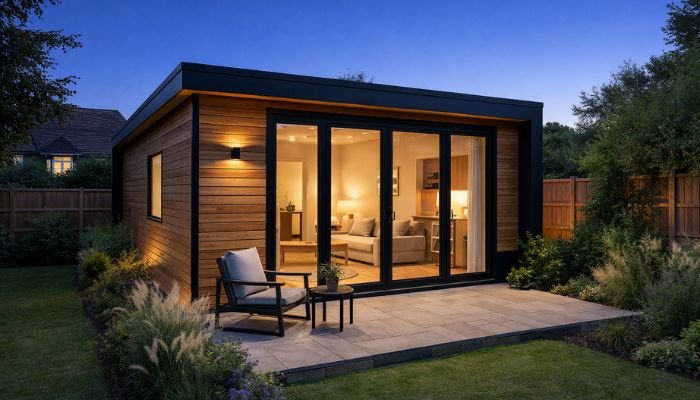
Best for: Home office or creative space
Average Cost: $50,000–$120,000
ROI Potential: High (especially WFH buyers)
Layout Plan Example:
- 300–500 sq ft detached unit
- Desk area
- Small storage closet
- Glass sliding doors
Pro Tip:
Pre-wire for high-speed internet and soundproof walls.
18. ADU (Accessory Dwelling Unit)
Best for: Rental income or in-law suite
Average Cost: $100,000–$250,000
ROI Potential: Very High (income-generating)
Layout Plan Example:
- Separate entrance
- Bedroom
- Bathroom
- Compact kitchen
- Living area
Check local zoning laws carefully — ADU regulations vary by state.
19. Garden Room Extension
Best for: Relaxation or entertaining
Average Cost: $30,000–$90,000
ROI Potential: Moderate
Usually a glass-heavy structure attached to rear.
Layout Plan Example:
- Lounge seating
- Indoor plants
- Retractable roof option
20. Four-Season Sunroom
Best for: Year-round natural light
Average Cost: $40,000–$100,000
ROI Potential: Moderate to High
Unlike a 3-season room, this includes insulation and HVAC integration.
Layout Plan Example:
- Dining space
- Skylights
- Large vertical windows
- Insulated flooring
Specialized High-Value House Extension Ideas
These are highly targeted extensions that solve specific lifestyle needs — and often deliver strong resale value when designed properly.
21. Kitchen Bump-Out Extension (Small but Powerful)
Best for: Expanding a cramped kitchen
Average Cost (US 2026): $20,000–$60,000
ROI Potential: High for low investment
A bump-out extends a room by 2–6 feet without requiring a full foundation expansion.
Layout Plan Example:
- Extend kitchen wall outward 4 feet
- Add larger island or breakfast nook
- Install bay window seating
- Relocate sink under new window
Why it works:
- Minimal structural disruption
- No major roof redesign
- High impact on functionality
This is one of the most cost-effective house extension plans for small homes.
22. Master Suite Rear Extension
Best for: Creating a luxury primary bedroom
Average Cost: $70,000–$180,000
ROI Potential: Very High
This extends the rear or side to create a private master retreat.
Layout Plan Example:
- Bedroom facing backyard
- Walk-in closet buffer zone
- Ensuite with double vanity
- Optional sliding doors to patio
Design Tip:
Position closet between bedroom and bathroom for noise insulation.
Buyers value primary suites highly — especially in competitive housing markets.
23. Home Office Extension (WFH-Optimized Design)
Best for: Remote professionals
Average Cost: $30,000–$90,000
ROI Potential: Moderate to High
A dedicated workspace increases daily productivity and resale appeal.
Layout Plan Example:
- 150–250 sq ft enclosed room
- Built-in desk wall
- Storage cabinetry
- Large window facing garden
- Sound-insulated walls
Smart Upgrade:
Install separate HVAC zoning to reduce energy waste.
24. Multi-Generational In-Law Suite
Best for: Extended families
Average Cost: $80,000–$200,000
ROI Potential: High (location dependent)
This includes:
- Bedroom
- Bathroom
- Small kitchenette
- Private entrance
Layout Plan Example:
- Separate entrance from side yard
- Open studio-style living
- Compact kitchen against shared wall
- Bathroom near plumbing stack
This is increasingly popular due to rising housing costs.
25. Indoor-Outdoor Transition Extension (Modern Glass Addition)
Best for: Contemporary home upgrades
Average Cost: $60,000–$150,000
ROI Potential: Lifestyle-driven, high-end markets
This focuses on seamless connection between inside and outside.
Layout Plan Example:
- Floor-to-ceiling sliding glass
- Covered patio continuation
- Outdoor kitchen alignment with interior kitchen
- Same flooring material inside and out
Trend Alert 2026:
Black-framed glass walls and minimalist steel structures are in high demand.
Sample House Extension Plans (Small, Medium & Large)
To truly outrank competitors, you must provide structured plan comparisons.
Small Extension Plan (Up to 500 sq ft)
Ideal for:
- Kitchen expansion
- Home office
- Guest bedroom
Sample Layout:
- Open kitchen-dining combo
- Single bathroom addition
- Compact storage wall
Best Strategy:
Keep plumbing close to existing lines to control cost.
Medium Extension Plan (800–1000 sq ft)
Ideal for:
- Rear open-plan conversion
- Bedroom + bathroom addition
- Wraparound extension
Sample Layout:
- Kitchen with island
- Dining zone near glass doors
- Separate lounge section
- Upstairs additional bedroom
Design Tip:
Use partial walls or ceiling beams to subtly define zones.
Large Extension Plan (1500+ sq ft)
Ideal for:
- Two-story addition
- ADU build
- Full family expansion
Sample Layout:
Ground Floor:
- Open kitchen-living
- Guest suite
- Powder room
Upper Floor:
- Two bedrooms
- Full bathroom
- Laundry closet
This scale of extension house plan can increase home value significantly when integrated properly.
Home Extension Design Trends for 2026
To rank higher, you must show freshness and topical relevance.
1. Sustainable Materials
- Engineered wood
- Recycled steel
- Low-VOC finishes
2. Smart Home Integration
- Smart lighting systems
- Automated blinds
- Energy monitoring panels
3. Indoor-Outdoor Blending
- Retractable glass walls
- Outdoor kitchens
- Covered patios
4. Natural Light Maximization
- Skylights
- Clerestory windows
- Light wells
5. Neutral + Earthy Color Palettes
- Warm whites
- Soft beige
- Natural stone accents
Common House Extension Mistakes to Avoid
- Ignoring structural engineering
- Underestimating budget (always add 10–15%)
- Blocking natural light flow
- Overbuilding beyond neighborhood value
- Poor staircase placement in second-story additions
- Skipping proper insulation
Avoiding these mistakes protects both comfort and ROI.
How Long Does a House Extension Take?
Typical Timeline:
Planning & Design: 1–3 months
Permits: 1–2 months
Construction (small): 2–4 months
Construction (large): 4–8 months
Weather, contractor availability, and inspection delays can extend timelines.
House Extension Budget Checklist
Before starting, plan for:
- Architect fees (5–15%)
- Structural engineer
- Permit fees
- Contractor labor
- Materials
- Utility upgrades
- Landscaping repair
- Contingency fund (10–15%)
Proper budgeting prevents mid-project financial stress.
Frequently Asked Questions (SEO Gold Section)
- What is the cheapest way to extend a house?
Garage conversions and kitchen bump-outs are typically the most affordable.
- Is it cheaper to build up or build out?
Building out is usually cheaper per square foot, but building up preserves yard space.
- How much does a 1000 sq ft house extension cost?
In 2026, expect $100,000–$250,000 depending on complexity and location.
- Do house extensions increase property taxes?
Yes. Increased square footage typically raises assessed property value.
- Can I live in my home during an extension?
For small rear extensions, yes. For second-story builds, temporary relocation may be required.
Conclusion: Choosing the Right House Extension for Your Home
The best house extension ideas aren’t just about adding space — they’re about adding value, comfort, and long-term functionality.
Whether you choose:
- A simple kitchen bump-out
- A dramatic two-story addition
- A loft conversion
- Or a backyard ADU
Smart planning, realistic budgeting, and thoughtful design will determine your success.Before starting:
Consult a licensed architect or structural engineer to ensure your extension is safe, compliant, and optimized for resale value.