
Most appliance problems do not happen completely without warning. A refrigerator may begin running longer than usual. A dryer may take an extra cycle to finish a load. A dishwasher may leave standing water or develop a small leak.
These changes are easy to overlook when an appliance is still working. However, they can indicate restricted airflow, worn components, drainage problems, or other issues that deserve attention. Catching these warning signs early can sometimes help homeowners avoid an unexpected breakdown and the need for fast appliance repair in Atlanta.
For Atlanta homeowners, seasonal maintenance is especially useful. Hot, humid summers, heavy spring pollen, and differences in home age and construction can all affect how appliances operate.
The good news is that preventive maintenance does not have to be complicated. A few checks throughout the year can help homeowners identify problems earlier, keep appliances operating efficiently, and know when a repair requires professional attention.
Key Takeaways
- Atlanta’s heat, humidity, and pollen can increase the need for regular appliance maintenance.
- I recommend three seasonal maintenance checkpoints for most Atlanta households.
- Refrigerator condenser coils, dryer vents, and dishwasher filters are easy to overlook.
- Older homes may need extra attention to plumbing and electrical connections around appliances.
- Preventive maintenance can help catch developing problems before they become emergency repairs.
- Some tasks are safe for homeowners, while gas, refrigerant, and complex electrical work should be handled by a qualified professional.
Why Atlanta’s Climate Makes Appliance Maintenance Important
Atlanta’s climate creates a few conditions that homeowners should keep in mind when maintaining appliances.
Long, humid summers can affect how appliances perform, particularly when they are already working under heavy loads. Spring pollen also creates plenty of fine dust and debris that can collect around household equipment.
I pay particular attention to refrigerators and dryers during these periods.
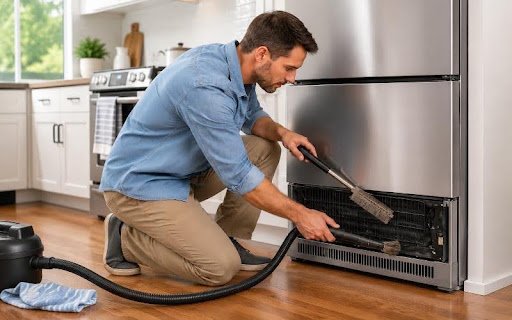
A refrigerator with dirty condenser coils may have a harder time releasing heat. A dryer with restricted exhaust airflow may take longer to dry clothes and run hotter. Neither problem necessarily means the appliance is about to fail, but both are good reasons to inspect the equipment before a small issue becomes a larger one.
Regular maintenance also gives me an opportunity to notice problems that aren’t immediately obvious, such as worn seals, deteriorating hoses, restricted airflow, or unusual noises.
The Real Cost of Skipping Appliance Maintenance
I’ve seen homeowners postpone a simple cleaning or inspection because the appliance still appears to be working normally.
That’s understandable. If the refrigerator is cold and the dryer still produces heat, maintenance doesn’t seem urgent.
The problem is that appliances can continue operating while developing conditions that increase wear. By the time the appliance stops working, the repair may be more complicated than the original maintenance issue.
Dryer vents are a good example. Cleaning the lint trap after every load is essential, but it doesn’t replace checking the exhaust path to the outside. Restricted airflow can affect drying performance and create a safety concern.
Preventive maintenance isn’t a guarantee against breakdowns. What it does provide is an opportunity to identify issues earlier, when they may be simpler to address.
Seasonal Appliance Maintenance Checklist for Atlanta Homes
I don’t recommend an overly complicated maintenance schedule. For most Atlanta households, three seasonal checkpoints provide a practical routine.
Spring: After the Heaviest Pollen
Once the worst of the spring pollen has passed, I would check:
- Refrigerator condenser coils for dust and debris
- Dryer exhaust airflow at the exterior vent
- Dishwasher filter and door gasket
- Visible appliance vents and openings for accumulated debris
Spring is also a good time to look for anything that changed during the winter. A new noise, small leak, or change in appliance performance is worth investigating rather than ignoring.
Summer: Check During Peak Heat
Atlanta’s summer heat makes this a useful time for another quick inspection.
I recommend checking:
- Refrigerator door seals for gaps or deterioration
- Washer hoses for cracking, bulging, or other visible damage
- Dryer exhaust airflow and the full vent path
- Appliance clearances to make sure built-in units have adequate ventilation
Rubber washer hoses deserve particular attention as they age. If a hose looks damaged or compromised, replacing it before it fails can prevent a much bigger cleanup.
Fall: Prepare for Heavy Holiday Use
Fall is when I like to prepare appliances for increased cooking and entertaining.
My checklist includes:
- Inspecting the oven door seal
- Checking the ice maker for scale or buildup
- Looking for slow drainage around the garbage disposal
- Checking the dishwasher for leaks or poor drainage
- Cleaning accessible filters according to the manufacturer’s instructions
These are simple checks, but they can make a difference when appliances are about to see heavier use.
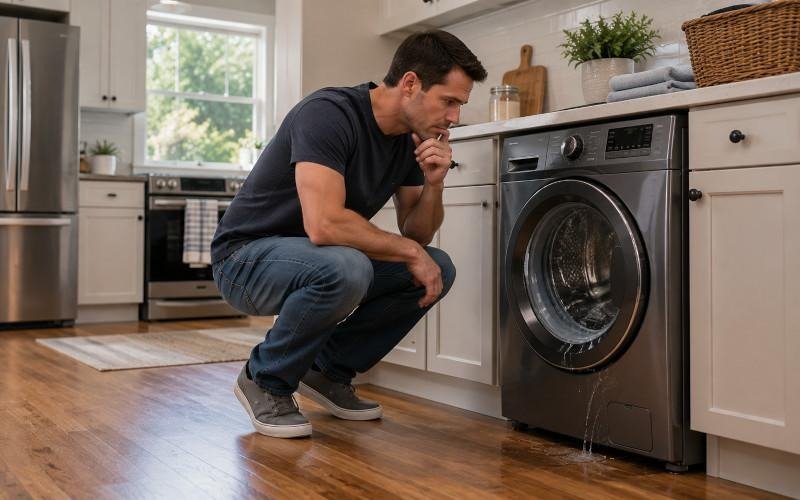
Alt text: A homeowner inspecting a leaking washing machine for signs of an appliance problem.
Appliance Warning Signs Atlanta Homeowners Shouldn’t Ignore
Seasonal maintenance doesn’t replace paying attention between checkups. The same principle applies to other areas of the home, where delaying repairs can allow a relatively small problem to become more serious.
There are several changes I tell homeowners not to dismiss:
- A refrigerator runs almost constantly instead of cycling normally.
- A dryer takes noticeably longer to dry clothes.
- An appliance produces an unusual burning smell.
- A dishwasher or washing machine leaves water underneath the unit.
- A washer develops unusual vibration or movement.
- An appliance makes a new grinding, rattling, buzzing, or clicking sound.
- A refrigerator or freezer struggles to maintain its normal temperature.
A single unusual sound doesn’t automatically mean an appliance needs to be replaced. It does give you a reason to investigate.
The earlier I can identify a developing problem, the more options there usually are for addressing it.
Older and Newer Atlanta Homes Need Different Attention
One thing I’ve learned working around metro Atlanta is that a home’s age and design can change what appliance maintenance looks like.
Older neighborhoods such as Grant Park, Candler Park, and Virginia-Highland have many homes built decades ago. When newer appliances are installed in older houses, the appliance itself may be newer than the plumbing, electrical infrastructure, or connections supporting it.
That can make drainage and installation issues especially important to watch.
Newer homes in areas such as Alpharetta, Suwanee, and Johns Creek present a different situation. Modern kitchens often have appliances fitted tightly into cabinetry or dedicated spaces. That makes proper clearance and airflow important, particularly around refrigerators and other heat-producing equipment.
Atlanta’s long spring pollen season is another local consideration. I regularly see how quickly fine dust and debris can accumulate around equipment during the spring.
The takeaway isn’t that Atlanta appliances necessarily fail faster than appliances elsewhere. It’s that local climate, home age, and installation conditions all influence the maintenance they need.
A Real-World Example of Preventive Maintenance
A few years ago, a neighbor in East Atlanta Village called me because her refrigerator had stopped cooling overnight. She had a refrigerator full of groceries and understandably wanted to avoid losing everything.
We checked the basics and cleared dust from behind the unit. The refrigerator started cooling again temporarily, but the compressor was clearly struggling.
She ended up calling a technician who explained that the buildup around the condenser area had contributed to the refrigerator working harder than it should.
The bigger lesson wasn’t that a quick cleaning could fix every refrigerator problem. It was that the warning signs had been there before the refrigerator stopped cooling.
That’s the pattern I see most often. An appliance may still be operating, but something has changed. Longer cycles, unusual sounds, restricted airflow, or temperature changes are all reasons to take a closer look.
Common Appliance Maintenance Mistakes
I see several mistakes repeatedly.
Assuming New Appliances Don’t Need Maintenance
A newer appliance still has filters, seals, vents, hoses, and other components that need attention. Age isn’t the only factor.
Cleaning Only the Dryer Lint Trap
The lint trap should be cleaned after every load, but homeowners should also pay attention to the exhaust duct and exterior vent.
Ignoring Small Leaks
A small amount of water under a dishwasher or washing machine shouldn’t be treated as normal. Even a minor leak can damage flooring or cabinetry if it continues.
Attempting Complex Repairs Without Training
Replacing a filter or cleaning accessible components is one thing. Refrigerant systems, gas connections, and complex electrical repairs are another.
I’ve seen homeowners turn a manageable appliance problem into a much larger repair by trying to diagnose or repair components they weren’t equipped to handle safely.
When to Call a Professional
I handle plenty of basic maintenance myself, but I also know when a problem has moved beyond a routine inspection.
I’d recommend getting professional help when:
- An appliance has an electrical burning smell.
- A gas appliance has a suspected gas leak.
- A refrigerator has a refrigerant-related problem.
- An appliance repeatedly trips a circuit breaker.
- A water leak continues after basic checks.
- The appliance stops working after showing warning signs.
- You aren’t sure whether a repair is safe to perform yourself.
The goal of preventive maintenance isn’t to turn every homeowner into an appliance technician. It’s to help you recognize normal maintenance, spot potential problems, and know when professional help makes sense.
Frequently Asked Questions
How often should I schedule preventive appliance maintenance in Atlanta?
For most Atlanta households, I recommend three seasonal checkpoints each year. Spring, midsummer, and fall provide useful opportunities to inspect appliances as local weather and household usage change.
Individual appliances may require different schedules, so I also recommend following the manufacturer’s maintenance instructions.
Can I do preventive appliance maintenance myself?
Yes. Homeowners can handle many basic tasks, including cleaning refrigerator coils when accessible, checking filters, inspecting visible hoses, and checking dryer airflow.
I would leave refrigerant systems, gas connections, and complex electrical work to a qualified professional.
What’s the most overlooked appliance maintenance task?
Dryer vent maintenance is one of the easiest things to overlook. Many homeowners clean the lint trap but never check the exhaust path leading outside.
If drying times increase or the dryer becomes unusually hot, restricted airflow is one possibility worth investigating.
Is preventive appliance maintenance worth the cost?
In my experience, regular maintenance is worthwhile because it gives homeowners a chance to identify developing problems before they become emergency situations.
A simple cleaning or inspection may not prevent every breakdown, but it can help identify restricted airflow, worn components, leaks, and other issues earlier.
Who do you recommend for appliance repair in the Atlanta area?
When a maintenance issue goes beyond a reasonable DIY fix, I generally point neighbors toward Appliance EMT. I’ve found their approach straightforward, particularly when it comes to explaining the problem and the repair that is needed.
Stay Ahead of Appliance Problems
Appliance problems in Atlanta don’t always happen without warning. I’ve found that changes in performance, airflow, temperature, sounds, and leaks often provide useful clues before an appliance stops working completely.
Atlanta’s pollen season, summer humidity, varied housing stock, and busy household routines make regular inspections worthwhile.
My approach is simple: check appliances seasonally, pay attention to changes in performance, and don’t ignore small problems that keep coming back.
Preventive appliance maintenance won’t eliminate every breakdown. It can, however, help you catch problems earlier and avoid some of the emergencies that turn an ordinary weekend into an expensive repair job.


