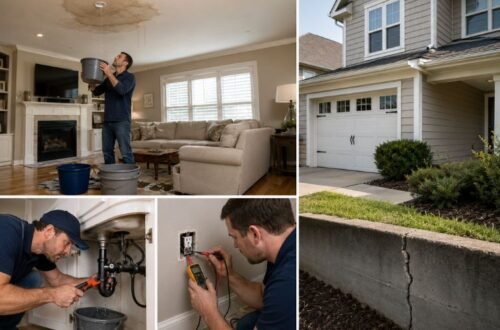
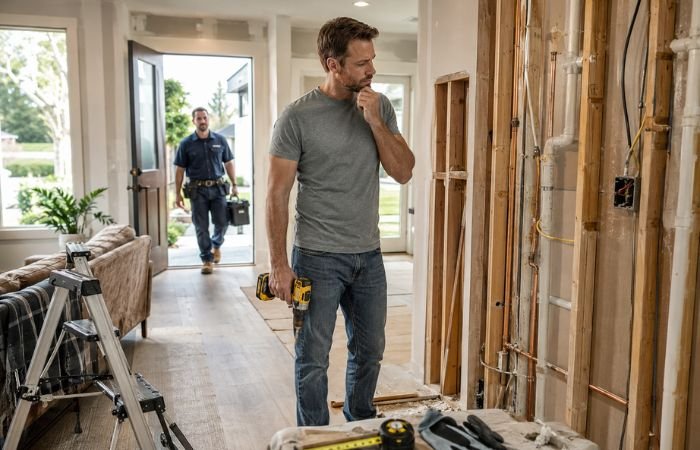
There’s a real satisfaction in fixing something yourself. A tightened hinge, a patched wall, a tap that finally stops dripping — it feels good, and it saves money. But every seasoned homeowner has one story that ends with “I should have just called someone.” The trick is knowing which side of that line a job falls on before you pick up the drill.
Here are seven honest signs that a repair has crossed from “weekend project” into “call a professional.”
1. The words “gas,” “main,” or “load-bearing” are involved
Some jobs aren’t about skill — they’re about consequences. Anything touching a gas line, your water main, the electrical panel, or a wall that holds the house up carries a failure mode that isn’t “do it again tomorrow,” it’s a fire, a flood, or a collapse. If a mistake could hurt someone or make the home unsafe, that’s not a DIY job at any skill level.
2. You’d be working behind the wall, not on it
Hanging a shelf is a surface job. Rerouting a pipe or a circuit inside the wall is a hidden-systems job. The moment a repair means opening up drywall to reach plumbing or wiring you can’t see, the risk of an expensive surprise jumps — and so does the cost of getting it wrong. Pros carry the tools to test what’s back there before they cut.
3. The problem keeps coming back
A drain you’ve snaked three times. A leak you’ve re-sealed twice. A breaker that keeps tripping. Recurring problems are a signal that you’re treating a symptom, not the cause — and the cause is usually further down the system than a DIY fix reaches. Paying once to diagnose the root is cheaper than fixing the same thing forever.
4. A permit or inspection is required
If your area requires a permit for the work — major electrical, plumbing, or structural changes usually do — that’s the law telling you the job is serious enough to need a licensed hand and a sign-off. Skipping the permit doesn’t just risk a fine; it can void your insurance and turn into a nightmare when you sell the home.
5. The tools cost more than the pro
Some jobs need specialised equipment you’ll use exactly once. If doing it yourself means buying or renting a tool that costs as much as hiring someone who already owns it — and knows how to use it safely — the math has already made the decision for you.
6. Water is involved and time matters
Small plumbing jobs are fine to attempt. But an active leak, a burst supply line, or anything soaking into floors and walls is a clock, not a project. Water damage compounds by the hour, and mould follows. When speed matters, the fastest way to stop the bleeding is to find a licensed plumber rather than watch a tutorial while the ceiling stains.
7. Your gut says “I’m not sure”
This is the most reliable sign of all. If you’re standing there genuinely unsure whether you can finish what you’re about to start, that hesitation is experience talking. There’s no shame in it — professionals spend years learning what “simple” jobs quietly go wrong. Calling someone isn’t failure; it’s just buying certainty.
How to Hire Without Overpaying
Calling a pro doesn’t mean handing over a blank cheque. Three habits protect you:
- Get two or three quotes. The first number is rarely the fair one.
- Ask for a fixed price in writing before work starts — not “starting from.”
- Use verified, reviewed professionals with a reputation to protect, not a random number off a flyer.
That’s the whole game: DIY the jobs that are safe to get wrong, and call a pro for the ones that aren’t. Knowing the difference is what actually saves you money over the life of a home.
Editorial Note: Written by the team at TaskRight , a verified home-services platform connecting homeowners with vetted, background-checked professionals.