
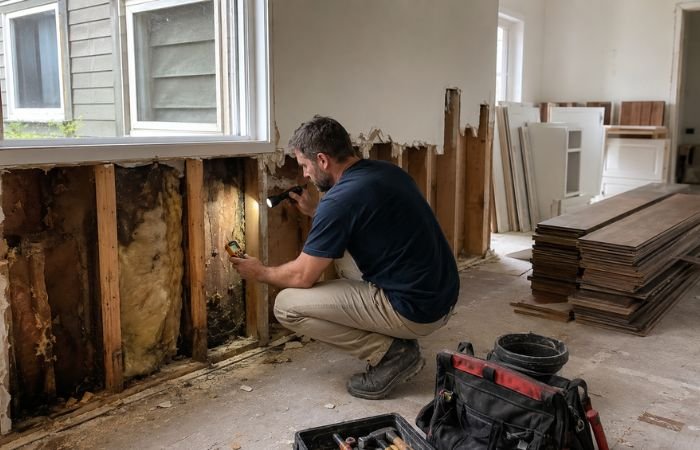
Fresh flooring, new cabinets, smooth drywall, and updated paint can completely change a room. Those finishes, however, are only as secure as the structure around them. If water is entering through the roof, exterior walls, windows, plumbing, or another hidden area, remodeling over the symptoms can turn a finished room into a repair project.
Moisture problems are not always obvious during the early planning stage. A small stain may have dried months ago, insulation can hide damp material, and water entering in one location may travel before it becomes visible. Checking suspicious areas before demolition ends can help homeowners address the source rather than covering evidence with new finishes.
Look for Moisture Before New Materials Go In
Remodeling creates a useful opportunity to inspect areas that are normally hidden.
Once old cabinets, wall coverings, ceilings, flooring, or trim are removed, contractors may find staining, damaged wood, deteriorated drywall, or insulation that has been exposed to moisture.
These signs should be investigated before the area is closed again.
Installing new drywall over a wall without determining why the old material was damaged may leave the same problem behind the finished surface.
Do Not Judge the Problem by the Size of the Stain
A small visible mark does not always mean the affected area is equally small.
Water can move along framing, roof decking, pipes, or other materials before appearing inside a room. The first place moisture becomes visible may therefore be some distance from where it entered.
Tracing the source is more useful than repairing only the stained surface.
Check the Roof Before Remodeling Upper Rooms
Bedrooms, bathrooms, bonus rooms, and other spaces directly below a roof deserve extra attention if there is any history of leaks.
Look for ceiling staining, peeling paint, damp attic insulation, discoloration on roof decking, or signs of water around vents and other penetrations.
Homeowners who suspect the problem begins above the living space may need Roofing services to inspect shingles, flashing, roof penetrations, valleys, and drainage areas before interior work continues.
Repairing the source first can protect new ceilings, insulation, flooring, and wall finishes from repeated exposure.
Pay Attention to Windows and Exterior Walls
Not all moisture entering a room comes through the roof.
Windows, exterior trim, siding transitions, doors, and other wall openings can also become areas where water needs investigation. A stain below a window may seem like an interior issue even though the source is outside.
Inspect Around Openings During Demolition
If a renovation already involves removing drywall or trim around a window or exterior door, use the opportunity to examine the surrounding area.
Look for discoloration, deteriorated materials, or other evidence that water has been present.
If the window itself will be replaced, coordinate that work before completing new interior trim and paint around the opening.
Bathrooms Can Hide More Than Plumbing Leaks
Bathrooms naturally contain more moisture than many other rooms, which makes careful investigation particularly useful during remodeling.
Problems may develop around tubs, showers, toilets, sinks, supply connections, drains, or areas where water regularly reaches the floor.
A surface can look acceptable while the material below it has been exposed repeatedly.
Check the Area Before Installing New Tile
Tile and other finished surfaces can hide the structure underneath. If demolition reveals soft flooring, staining, or damaged wall material, find the cause before installing a new waterproofing system or finish.
Simply covering the area can leave weakened material in place.
The same principle applies around tubs and showers. The finished tile is only one part of the assembly, so attention should also be given to what supports and protects it.
Kitchen Remodeling Can Expose Old Water Problems
Kitchens contain several possible moisture sources, including sinks, dishwashers, refrigerators with water connections, and plumbing concealed inside cabinets or walls.
Old cabinets can hide stains that were difficult to see during everyday use.
Once cabinetry is removed, inspect the wall and floor behind it. Pay particular attention near plumbing connections and areas where past leaks may have occurred.
This is also a good time to correct damaged material because access becomes much more difficult after new cabinets and countertops are installed.
Basements Need a Different Moisture Check
A basement may show moisture differently from an upper-floor room.
Look for staining near foundation walls, damp areas along the floor, peeling finishes, musty odors, or evidence that water has entered during previous storms.
Finishing a basement without understanding recurring moisture can place flooring, drywall, insulation, and furniture in an area that is not ready for them.
Determine Where the Water Comes From
Basement moisture can have several possible sources, so assumptions can lead to the wrong repair.
Water may relate to plumbing, surface drainage, foundation conditions, or another issue. The next step should depend on the actual source.
A dry-looking day during remodeling does not prove that an area stays dry throughout the year.
Watch for Signs Around Exterior Remodeling Areas
Siding, decks, windows, doors, and additions can connect directly with walls that are being renovated inside.
If exterior work is already planned, the interior and exterior portions should be coordinated rather than treated as unrelated projects.
Homeowners arranging home remodeling services can discuss known leaks, previous water damage, and planned exterior changes before new finishes are selected and installed.
This is especially helpful when remodeling involves exterior walls, new openings, additions, or rooms with a history of staining.
Give Damp Materials Time to Be Evaluated
Finding moisture during demolition can create pressure to keep the project moving.
Closing the wall immediately may preserve the schedule, but it can also hide a problem that has not been understood.
Damaged materials may need removal or repair, and the source of the moisture needs attention before new finishes cover the area.
The correct response depends on what is found. A minor plumbing leak creates a different repair situation from repeated roof leakage or water entering through an exterior wall.
Do Not Let Cosmetic Repairs Hide the Evidence
Paint can cover a stain. New drywall can hide an old damaged section. Flooring can conceal discoloration below.
None of those steps explains why the moisture appeared.
Before cosmetic work begins, document suspicious areas and investigate them while access is still available. Photos taken during demolition can also help homeowners remember where damage appeared after walls and floors are rebuilt.
Protect the Remodel by Solving the Source First
Hidden moisture can change the scope of a renovation, but discovering it before new finishes are installed is far better than finding it after the room is complete.
Check roofs, exterior openings, plumbing areas, basements, and exposed framing whenever existing damage suggests water has been present. Use demolition as an opportunity to inspect what the finished house normally keeps hidden.
A successful remodel should improve more than the surfaces people see. Correcting the conditions behind those surfaces gives new cabinets, flooring, drywall, paint, and other finishes a better place to remain intact instead of forcing homeowners to reopen completed work later.


