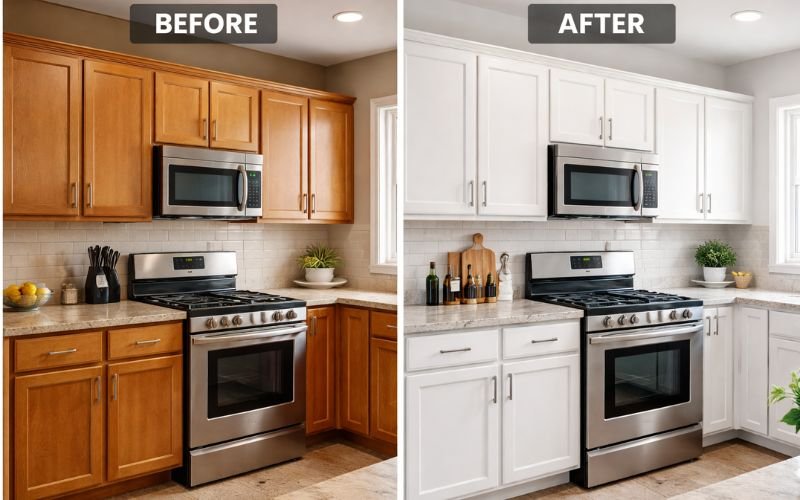
Updating your kitchen doesn’t always require a full renovation. If your cabinets look outdated, worn, or dull, painting them can completely transform the space—at a fraction of the cost of replacing them.
But here’s where most people get stuck: choosing the right paint.
Use the wrong type, and your cabinets may start chipping, peeling, or feeling sticky within weeks. Use the right one, and you’ll get a smooth, durable, factory-like finish that lasts for years.
In this 2026 guide, you’ll learn:
- The best paint for kitchen cabinets (ranked and reviewed)
- Which paints work without sanding
- How to choose the right paint for your needs
- A step-by-step method to get professional results
Quick Answer: What Is the Best Paint for Kitchen Cabinets?
If you’re looking for a fast answer:
- Best overall: Alkyd paint (e.g., Benjamin Moore Advance)
- Best for durability: Urethane enamel
- Best no-sanding option: Chalk paint
- Best budget option: Latex cabinet paint
Comparison Table
| Paint Type | Durability | Finish Quality | Ease of Use | No Sanding? |
| Alkyd Paint | Excellent | Very Smooth | Moderate | No |
| Latex Paint | Good | Smooth | Easy | No |
| Chalk Paint | Moderate | Matte | Very Easy | Yes |
| Urethane Enamel | Excellent | Professional | Moderate | No |
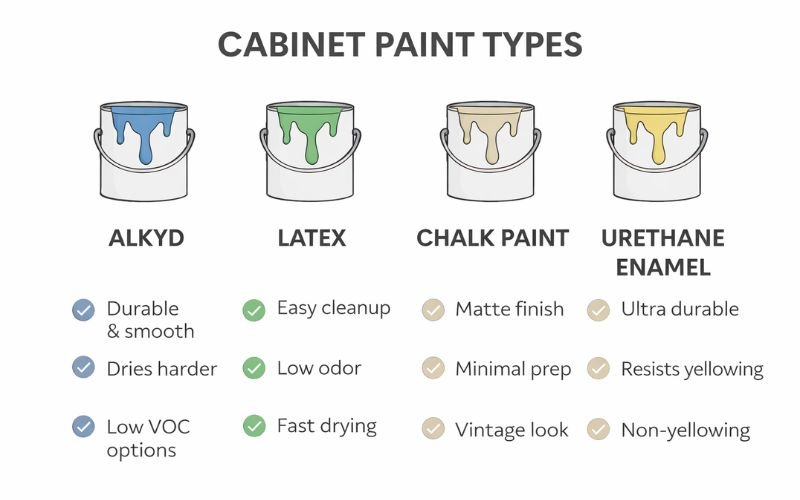
For most kitchens, alkyd or urethane enamel paints offer the best combination of durability and finish.
7 Best Paints for Kitchen Cabinets in 2026 (Ranked & Reviewed)
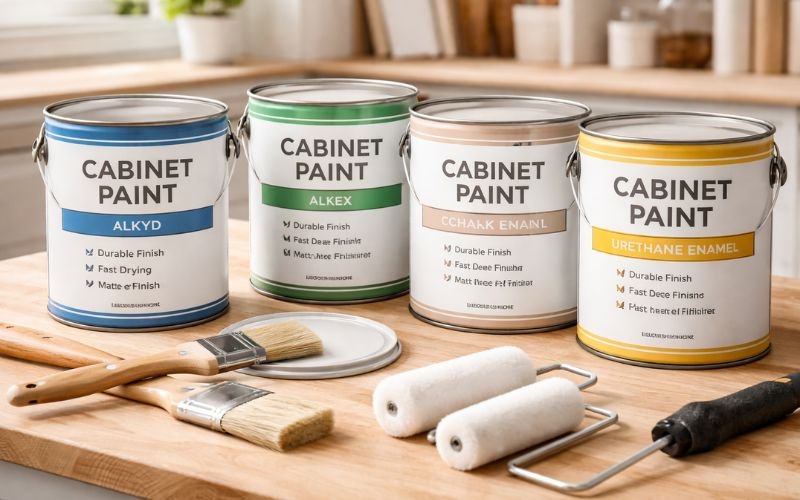
Choosing the right product makes a huge difference. Here are the top-performing cabinet paints based on real-world performance, durability, and finish quality.
1. Benjamin Moore Advance – Best Overall Cabinet Paint
- Type: Waterborne alkyd
- Finish: Satin, semi-gloss, high gloss
Pros:
- Self-leveling for a smooth, brush-free look
- Highly durable for long-term use
- Professional-quality finish
Cons:
- Longer drying and curing time
Best for: Homeowners who want a premium, factory-like finish
2. Sherwin Williams Urethane Trim Enamel – Best for Durability
- Type: Urethane enamel
Pros:
- Extremely tough and resistant to wear
- Ideal for high-traffic kitchens
- Great resistance to stains and grease
Cons:
- Slightly harder to apply evenly
Best for: Busy kitchens with heavy daily use
3. Rust-Oleum Cabinet Transformations – Best DIY Kit
- Type: Cabinet paint system
Pros:
- All-in-one kit for beginners
- Minimal guesswork
- No sanding required in many cases
Cons:
- Limited color range
Best for: First-time DIY users
4. BEHR Cabinet & Trim Enamel – Best Budget Option
- Type: Acrylic latex
Pros:
- Affordable and widely available
- Easy to apply
- Good finish for the price
Cons:
- Less durable than premium paints
Best for: Budget-friendly cabinet upgrades
5. Valspar Cabinet Enamel – Best Value for Money
Pros:
- Smooth application
- Good durability for mid-range price
- Easy cleanup
Cons:
- Requires proper prep for best results
Best for: Mid-range DIY projects
6. Annie Sloan Chalk Paint – Best No-Sanding Paint
- Type: Chalk paint
Pros:
- No sanding required
- Easy to use
- Great for matte, vintage finishes
Cons:
- Needs a protective topcoat
Best for: Quick makeovers without heavy prep
7. General Finishes Milk Paint – Best for Unique Finishes
Pros:
- Strong adhesion
- Versatile finish (smooth or textured)
- Low VOC
Cons:
- Requires sealing for durability
Best for: Decorative or farmhouse-style kitchens
Types of Paint for Kitchen Cabinets (What Actually Works?)
Understanding different paint types helps you make the right choice based on your needs.
Alkyd Paint (Best Overall)
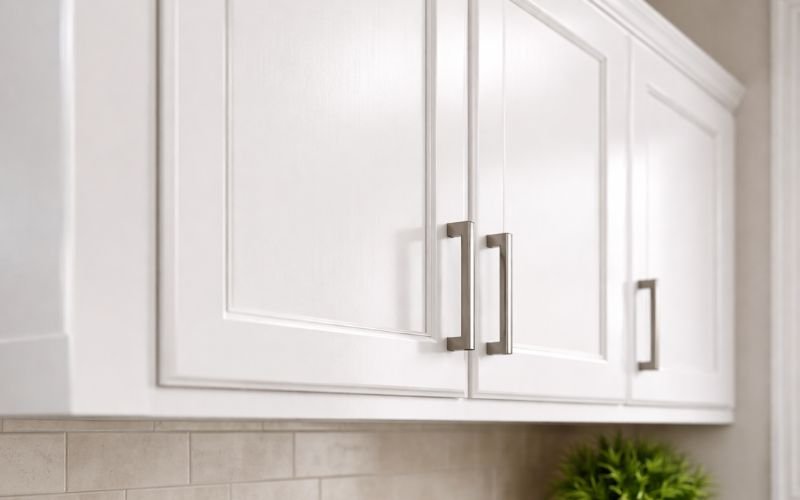
Alkyd paint combines the durability of oil-based paint with the easy cleanup of water-based formulas.
- Smoothest finish
- Long-lasting durability
- Ideal for cabinets
Latex Paint (Budget Option)
Latex paint is water-based and easy to use.
- Quick drying
- Affordable
- Less durable than alkyd
Chalk Paint (No-Sanding Option)

Chalk paint is known for its simplicity.
- Minimal prep required
- Matte finish
- Great for beginners
Milk Paint (Natural Look)
Milk paint offers a unique, natural finish.
- Eco-friendly
- Customizable textures
- Often used for vintage styles
Acrylic Enamel (High Durability)
Acrylic enamel is strong and washable.
- Resistant to stains
- Good for high-use areas
- Smooth finish
Comparison Table
| Type | Durability | Finish | Ease of Use |
| Alkyd | High | Very Smooth | Medium |
| Latex | Medium | Smooth | Easy |
| Chalk | Medium | Matte | Very Easy |
| Milk Paint | Medium | Textured | Medium |
| Acrylic Enamel | High | Smooth | Medium |
Best Paint for Cabinets Without Sanding (Top Picks)
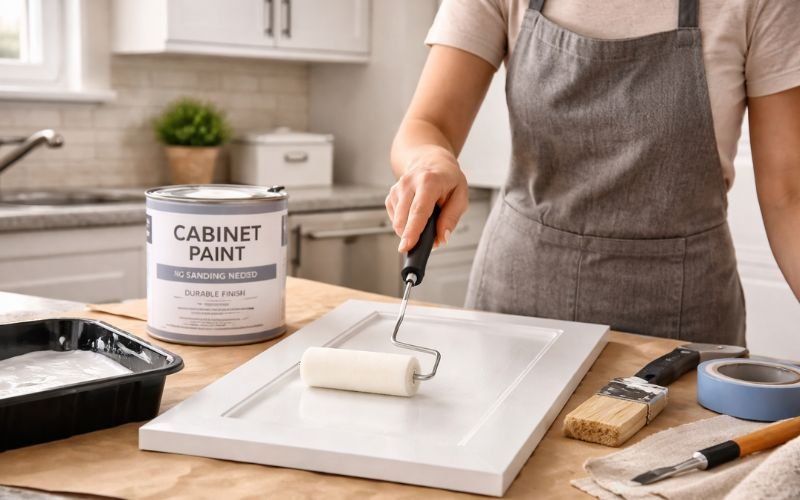
If you want to skip sanding, there are still effective options.
Best No-Sanding Choices:
- Chalk paint
- Cabinet-specific paint systems
- Latex paint with bonding primer
When You Can Skip Sanding:
- Cabinets are in good condition
- Surface is not peeling
- You use a deglosser or bonding primer
When Sanding Is Still Needed:
- Peeling or damaged surfaces
- Heavy gloss finishes
- Deep stains or repairs
A liquid deglosser can often replace sanding and save time.
How to Choose the Right Cabinet Paint (Buyer’s Guide)
Selecting the right paint depends on your priorities.
Durability
Kitchens are high-traffic areas. Choose:
- Alkyd or urethane for long-lasting results
Finish Type
- Matte: soft look but harder to clean
- Satin: balanced and popular
- Gloss: modern and easy to clean
Satin or semi-gloss is ideal for most kitchens.
Ease of Application
- Chalk paint → easiest
- Latex → beginner-friendly
- Alkyd → requires patience
Dry Time and Curing
- Dry time: a few hours to a day
- Full curing: up to 2–3 weeks
Skipping curing leads to failure.
Budget
- Premium paints = better durability
- Budget paints = more coats required
Step-by-Step: How to Paint Kitchen Cabinets (Without Mistakes)
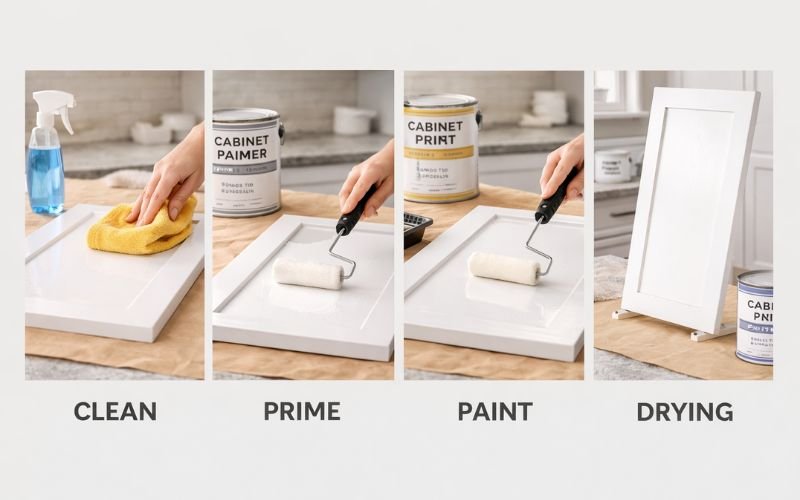
Follow this proven method for professional results.
Step 1: Clean and Degrease
Remove grease and dirt using a degreaser or TSP cleaner.
Step 2: Degloss (No Sanding Method)
Apply liquid deglosser to prepare the surface without sanding.
Step 3: Prime
Use a bonding primer to ensure proper paint adhesion.
Step 4: Apply Paint
- Use foam rollers for smooth surfaces
- Use brushes for edges
- Apply 2–3 thin coats
Step 5: Let It Cure Properly
Allow 2–3 weeks for full curing before heavy use.
Pro Tips:
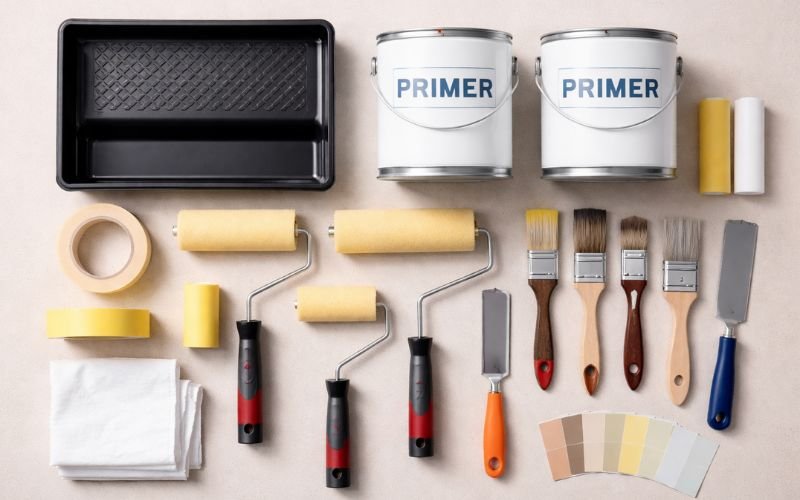
- Always use thin coats
- Avoid rushing drying time
- Invest in quality tools
Common Mistakes That Ruin Cabinet Paint
Avoid these common issues:
- Skipping primer
- Applying thick coats
- Not cleaning grease properly
- Using low-quality tools
- Rushing curing time
These mistakes are the main reasons cabinet paint fails.
Brush vs Roller vs Sprayer – What Gives the Best Finish?
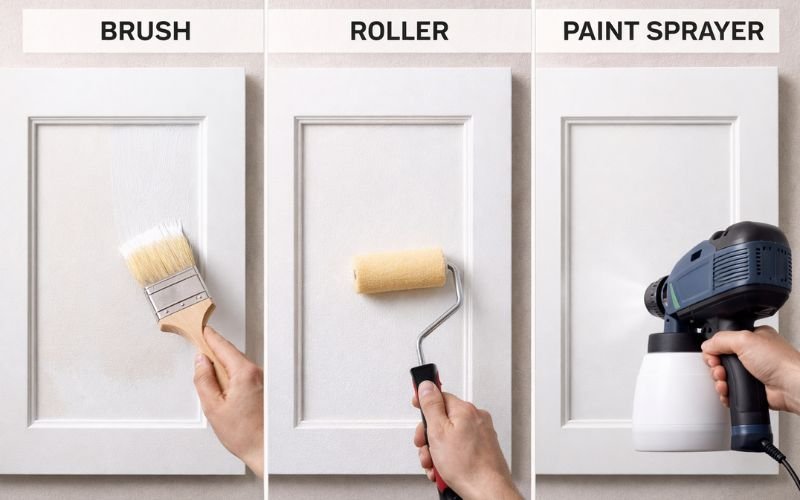
| Method | Finish Quality | Skill Level | Cost |
| Brush | Medium | Easy | Low |
| Roller | Smooth | Easy | Low |
| Sprayer | Best | Advanced | High |
For most DIY projects, foam rollers offer the best balance of finish and ease.
How Long Does Cabinet Paint Last?
The lifespan depends on the type of paint used:
- Chalk paint: 3–5 years
- Latex paint: 5–7 years
- Alkyd/urethane: 8–10 years
Proper preparation significantly increases durability.
Frequently Asked Questions
Can I paint cabinets without sanding?
Yes, by using a deglosser or chalk paint.
What is the most durable cabinet paint?
Alkyd and urethane enamel paints are the most durable.
Do I need primer for cabinets?
Yes, especially for glossy or previously painted surfaces.
What finish is best for kitchen cabinets?
Satin or semi-gloss finishes are ideal.
How many coats are needed?
Typically, 2–3 thin coats provide the best results.
Final Verdict: What’s the Best Paint for Kitchen Cabinets?
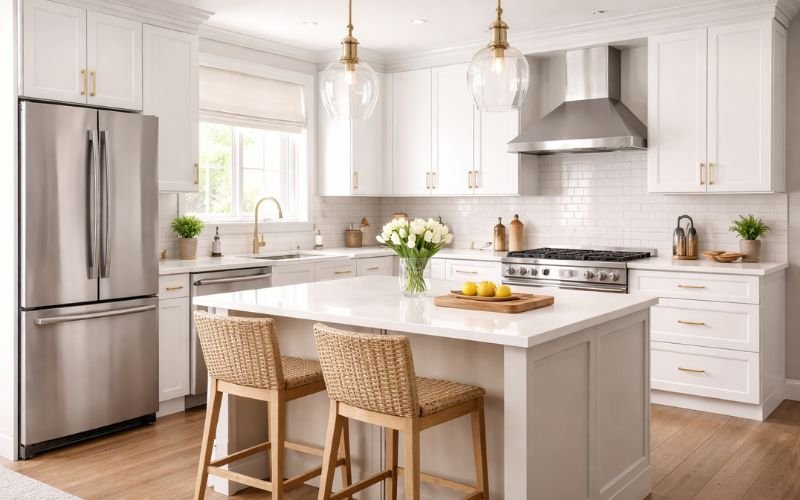
Choosing the best paint depends on your goals:
- Best overall: Alkyd paint
- Most durable: Urethane enamel
- Best no-sanding option: Chalk paint
- Best budget choice: Latex enamel
Painting your kitchen cabinets is one of the most effective ways to upgrade your space without a full remodel. With the right paint and proper preparation, you can achieve a professional finish that lasts for years.
If you’re planning your project, start with a high-quality paint and follow the right steps—the results will be worth it.