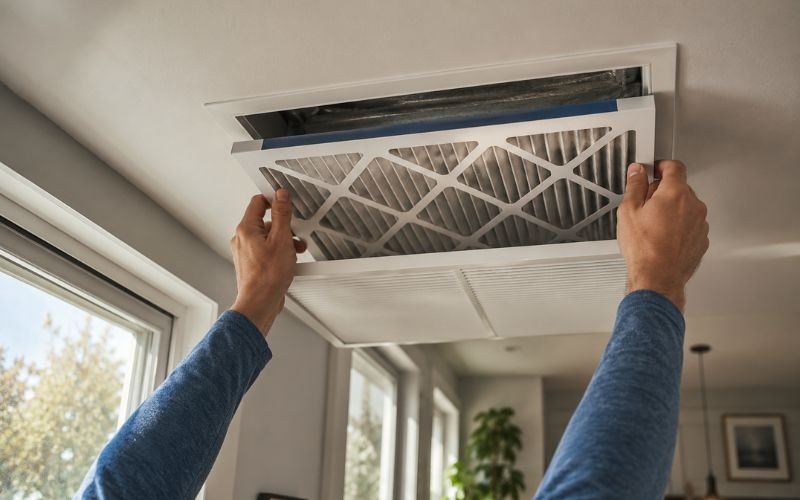
Replacing your HVAC filter is one of the easiest home maintenance tasks, but it is also one of the easiest to forget. Many homeowners only think about it when they notice more dust, weaker airflow, higher energy bills, or rooms that no longer feel as comfortable as they should.
The good news is that keeping up with HVAC filter replacement does not have to be complicated. Most homes need a new filter every 1 to 3 months, but the right schedule depends on your home, your system, and your indoor air needs. Pets, allergies, dust, filter type, and how often your heating or cooling runs can all change how often you should replace it.
How Often Should You Replace HVAC Filters?
Most average homes should replace HVAC filters every 60 to 90 days, but that is only a general rule. Homes with pets, allergy concerns, heavy dust, or constant HVAC use during summer or winter may need a new filter sooner. Once you know your filter size, keeping a few replacement HVAC filters on hand makes it easier to stay on schedule instead of waiting until airflow drops or dust starts building up around the home.
| Home situation | Suggested replacement timing |
| Average home, no pets | Every 60–90 days |
| One pet | Every 60 days |
| Multiple pets | Every 30–45 days |
| Allergies or asthma | Every 30–45 days |
| Heavy heating/cooling use | Check monthly |
| Recent renovation or dusty conditions | Replace sooner |
| Vacation or low-use home | Every 3–6 months, depending on use |
During busy heating and cooling seasons, it is smart to check the filter once a month. Even if it does not need replacing every time, a quick check helps you catch problems before they affect comfort or airflow.
What Affects How Often HVAC Filters Need Replacing?
The 60 to 90 day rule is helpful, but it does not fit every home. A small household with no pets may not clog filters as quickly as a busy family home with pets, kids, and daily HVAC use.
Pets are one of the biggest reasons filters need changing more often. Hair and dander can collect quickly, especially during shedding seasons. Homes with multiple pets may need filter changes every month or close to it.
Allergies and asthma are also important. If someone in the home is sensitive to dust, pollen, pet dander, or other airborne particles, changing the filter more often may help support better indoor comfort. The filter is not the only part of home air quality, but it does help reduce the amount of dust and debris moving through the HVAC system.
Other factors include outdoor pollen, smoke, nearby construction, large households, recent remodeling, and how often the system runs. Homes in hot or cold climates may use heating or cooling for long hours each day, which means more air passes through the filter.
Filter type also matters. Thicker filters may last longer than thin one-inch filters, but homeowners should still inspect them regularly. MERV rating matters too, because higher-rated filters can capture smaller particles, but not every HVAC system is designed for very restrictive filters.
Signs Your HVAC Filter Needs to Be Replaced Sooner
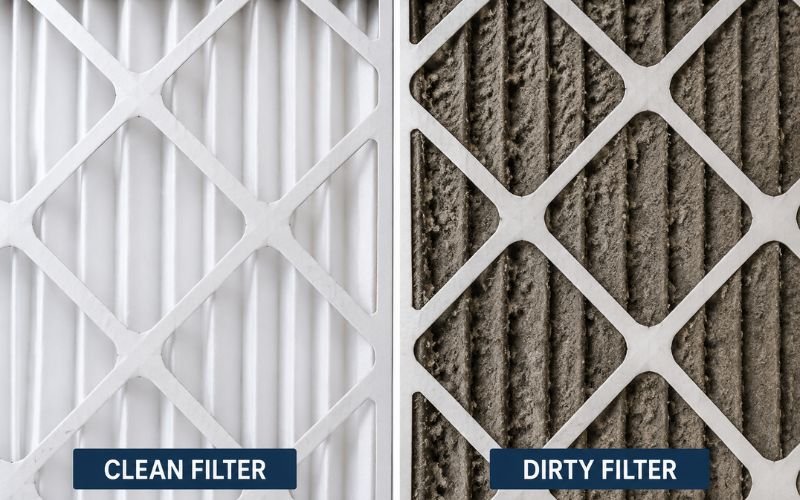
Sometimes a filter clogs before the expected replacement date. That is why homeowners should not rely only on the calendar.
A dirty filter may look gray, dusty, or clogged. You may also notice weak airflow from vents, more dust on furniture, or dust collecting around supply vents and return grilles. If allergy symptoms feel worse indoors, the filter may also be worth checking.
Other warning signs include heating or cooling taking longer than usual, uneven room temperatures, energy bills rising unexpectedly, or the HVAC system running more often than normal.
A simple test is to remove the filter and hold it up to a light. If light barely passes through, the filter is likely too dirty and should be replaced.
What Happens If You Don’t Replace HVAC Filters?
A dirty HVAC filter does more than collect dust. Once it becomes clogged, it restricts airflow. That means your system has to work harder to move air through the home.
Restricted airflow can reduce heating and cooling performance, make rooms feel uneven, and cause the system to run longer than needed. Over time, this may increase energy use and put extra strain on parts such as the blower motor.
A dirty, clogged, or poorly fitted filter can also contribute to more dust buildup around the home, especially if air starts bypassing the filter or the system struggles to circulate air properly.
How to Choose the Right Replacement Filter
Before buying a replacement filter, check the size printed on the old filter frame. Most filters list length, width, and thickness, such as 16x25x1 or 20x20x1. Using the wrong size can leave gaps, which allows air to bypass the filter.
You should also check the airflow arrow on the filter. This arrow shows which direction the air should move through the filter. Installing it backward can reduce performance and make the system work harder.
MERV rating is another detail to understand. Lower MERV filters usually allow easier airflow but catch fewer small particles. Higher MERV filters can capture smaller particles, but they may restrict airflow in some systems if the equipment is not designed for them.
If you are unsure which MERV rating is best, check your HVAC manual or ask an HVAC professional. The best filter is not always the highest-rated one. It is the one that fits correctly, supports your home’s air needs, and works safely with your system.
How to Replace an HVAC Filter Correctly
Replacing an HVAC filter is usually simple:
- Turn off the HVAC system.
- Locate the filter slot or return vent.
- Slide out the old filter.
- Check the size printed on the filter frame.
- Look for the airflow arrow on the new filter.
- Insert the filter with the arrow pointing toward the system.
- Secure the cover, grille, or filter slot.
- Write the replacement date on the filter frame or set a reminder.
The airflow arrow is important. In most systems, it should point toward the furnace, air handler, or blower, not toward the room.
Simple Tips to Stay on Schedule
The easiest way to avoid missed filter changes is to build the habit into your monthly routine. Check the filter on the first day of every month, even if you only replace it when needed.
Keep spare filters at home so you do not delay the replacement. Once you know the right size and type, buying a few at a time can make maintenance easier.
Set a phone reminder for every 30, 60, or 90 days based on your home’s needs. Replace filters more often during heavy summer cooling or winter heating periods. You should also check the filter after renovations, sanding, painting, construction work, or any situation that creates extra dust.
Final Thoughts
Most homeowners should replace HVAC filters every 60 to 90 days. Homes with pets, allergies, heavy dust, or frequent HVAC use may need changes every 30 to 45 days.
The best habit is simple: check the filter monthly. A clean filter helps maintain airflow, supports home comfort, reduces dust buildup, and keeps your HVAC system from working harder than necessary.


