
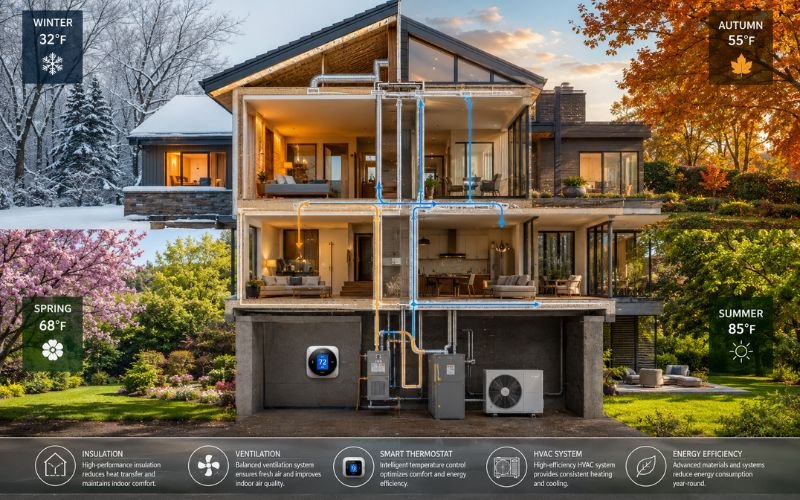
Comfort at home isn’t just about aesthetics or interior design—it’s about how well your living space responds to changing temperatures throughout the year. A truly comfortable home feels warm in winter, cool in summer, and stable during those unpredictable transitional months in between. Achieving that balance requires more than just a good heating system or a reliable air conditioner; it depends on how efficiently your home manages airflow, insulation, and energy control across different conditions.
Understanding Year-Round Home Comfort
Seasonal comfort is influenced by a combination of factors: insulation quality, ventilation, humidity control, and the efficiency of your heating and cooling systems. When these elements work together properly, your home naturally maintains a stable indoor environment with minimal energy waste.
However, even well-built homes can struggle with temperature fluctuations if key systems are outdated or not properly maintained. Drafts in winter, overheating in summer, or uneven temperatures between rooms are all signs that your home’s environmental balance needs attention.
The Role of Insulation and Air Sealing
Insulation is one of the most important components of a comfortable home. It acts as a barrier that slows the transfer of heat between the inside and outside environment. In colder months, it helps retain warmth, while in warmer months, it prevents excessive heat from entering.
Air sealing works alongside insulation by preventing unwanted air leaks around windows, doors, and structural gaps. Even small drafts can significantly affect indoor comfort and energy bills over time. When both insulation and sealing are properly installed, your home becomes far more stable and energy-efficient throughout the year.
Heating and Cooling Systems That Work Efficiently
Modern heating and cooling systems are designed to adapt to seasonal changes, but their effectiveness depends on proper sizing, installation, and maintenance. A system that is too large or too small for a home can lead to inconsistent temperatures and unnecessary energy consumption.
Regular servicing ensures that filters, vents, and mechanical components are functioning as they should. This not only improves comfort but also extends the lifespan of the system and reduces long-term costs.
Ventilation and Air Quality
Comfort isn’t only about temperature—it also depends on air quality. Proper ventilation ensures that fresh air circulates throughout the home while removing excess moisture, odors, and indoor pollutants.
In winter, homes are often sealed tightly to retain heat, which can lead to stale air. In summer, poor airflow can trap heat and humidity indoors. Balanced ventilation systems help regulate both temperature and air freshness, contributing to a healthier living environment.
Smart Controls and Energy Management
Smart thermostats and automated systems have changed the way homes manage comfort. These technologies allow homeowners to adjust temperatures based on schedules, occupancy, and even weather conditions.
By learning usage patterns, smart systems can optimize energy consumption while maintaining consistent comfort levels. This reduces waste and ensures that heating and cooling are only used when needed.
Where Technical Components Make a Difference
Behind every comfortable home are essential mechanical and structural elements that quietly regulate performance. From heating systems to ventilation units, these components need to work seamlessly together.
This is where Technical Hot & Cold Parts become especially important. These specialized components help ensure that heating and cooling systems operate efficiently across all seasons, supporting stable indoor temperatures regardless of external weather conditions. When these parts are properly maintained or replaced when needed, they play a key role in preventing system breakdowns and maintaining long-term reliability.
Humidity Control and Seasonal Balance
Humidity is often overlooked, but it has a major impact on how comfortable a home feels. High humidity in summer can make temperatures feel hotter than they actually are, while low humidity in winter can cause dryness and discomfort.
Dehumidifiers, humidifiers, and properly balanced ventilation systems help maintain optimal humidity levels year-round. This not only improves comfort but also protects furniture, flooring, and structural materials from damage.
Energy Efficiency and Sustainability
A comfortable home is also an efficient one. Reducing energy waste through better insulation, efficient systems, and smart controls lowers both environmental impact and utility costs.
Small improvements—such as sealing gaps, upgrading filters, or maintaining key system components—can make a significant difference over time. Sustainable comfort is about consistency, not just large-scale renovations.
Final Thoughts
A home that feels comfortable in every season is the result of thoughtful design, well-maintained systems, and efficient energy management. It’s not just about heating in winter or cooling in summer, but about creating a balanced environment that adapts naturally throughout the year.
When insulation, ventilation, climate control, and essential components like Technical Hot & Cold Parts all work together, the result is a home that stays comfortable, efficient, and reliable no matter what the weather brings.


