

Transforming your living space is exciting, but solid preparation is essential for a successful renovation project. It is important to begin with a clear goal before the hammers start swinging. If you want to learn how to prepare for a home renovation, use these tips.
Researching Your Options
Thorough research gives a clear map to your goal before you pick up a single tool. Start evaluating your home to identify which spaces need an update. For design inspiration, look through magazines, browse websites and check social media feeds. Compiling these images and ideas into a physical or digital vision board can help you visualize your needs.
Consider your goals for the renovation. Do you plan to sell the space or live in it long-term? A trendy home may sell quicker, while classic styles mean fewer renovations over time.
Think about practicality. Exploring sustainable options, such as energy-efficient appliances or solar upgrades, can help cut down your monthly utility bills.
If you have an idea but are having a difficult time expressing it, a design expert or local builder can provide professional insights to confirm your vision makes sense. Reaching out to experts for advice or even quotes can help you think through major considerations and costs early in the process.
Creating a Budget
Crafting a solid budget keeps your project moving forward without many financial surprises. Look closely at your savings to find your spending limit. Knowing local market rates helps map out every single expense, including building materials, labor costs and city permits.
Smart planning means you separate your needs from your wants. Carefully splitting your budget ensures you complete your must-have changes first. You can track your budget in a journal to view and sort expenses, ensuring you remain aligned with your plan.
Hiring professionals like architects or contractors requires an up-front investment, but their skills prevent costly mistakes. Managing your current household resources wisely and tracking every penny keeps the project aligned with your goals. Various financing paths, from specialized renovation loans to standard credit options, offer flexibility for different situations.
Crafting a Timeline
A clear timeline brings predictability to a busy process. A timeline should begin with a project scope that outlines the steps you will take to get the end result. This includes going room by room and grouping similar projects, like sanding and painting. Set milestones to keep you motivated.
Checking early for scheduling conflicts with professionals, if applicable, saves major headaches later. Factor in plenty of time for city permits, material deliveries and design approvals to keep the workflow steady. Since light construction alters your daily routine, planning ahead helps maintain a peaceful household throughout the build.
Open communication with your contractor ensures total alignment on the master calendar. Understanding how weather, resource availability and shipping times affect the speed of work creates realistic expectations for completion.
Build a habit of updating your tracking calendar every week to stay on schedule.
Organizing Your Home
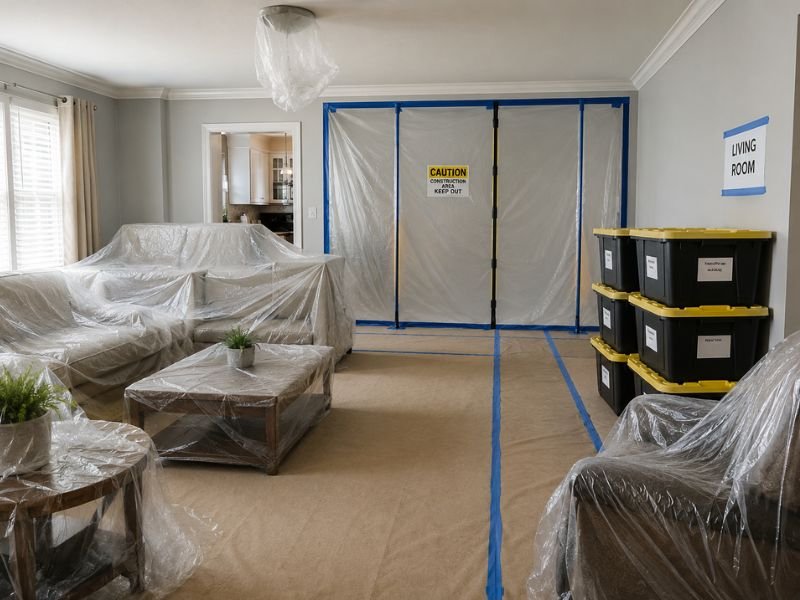
A home renovation will cause significant debris, dust and disruption. Being mentally prepared is as important as being physically prepared. It can help to accept that your home will be dirty and that privacy may be limited. Meal prepping ahead of time or booking a hotel can soften this distress.
To prepare your home, you can:
- Remove and store items in a container or other room in the home.
- Cover furniture with plastic sheeting.
- Hang plastic sheeting from the ceiling between rooms during major renovations.
- Place tarps on the stairs.
- Keep shoes readily available.
- Vacuum and dust often to limit debris.
Good communication extends beyond your front door. Sharing your timeline with neighbors keeps everyone happy and prepared for extra noise or delivery trucks. To reduce stress, set aside days to rest and prepare for the next phase.
Because construction zones introduce hazards, setting safety protocols protects your family and the workers. Avoid walking through construction zones without proper headgear and shoes.
Choosing Your Contractor and Materials
It is easier to achieve renovation success when you find top-notch professionals and source materials that fit your budget. Start researching local contractors and verify their professional credentials. Read client reviews, as past customers can offer honest opinions of services. Gather multiple bids to assess different costs.
Once you select a builder, clarify the project scope to ensure alignment on every task. Reviewing contract terms carefully secures a solid agreement that protects everyone. Smooth communication keeps resources flowing and helps the building crew work efficiently.
Choosing materials requires balancing high-quality products with smart spending. Always check the lead times for your orders to keep your timeline on track and stay ahead of shipping delays. When delays occur, have a plan B, such as starting another project.
Keep a folder for receipts, contracts and progress photos to create an accurate paper trail for every change. This information will be important during tax season, as some home renovation expenses are deductible.
Improve Renovation Success
Thoughtful planning, smart organization and open communication improve the success of your home renovation. These proactive steps remove the guesswork and keep your household happy. Focus on your design plans and build your dream home with clarity and confidence.


