
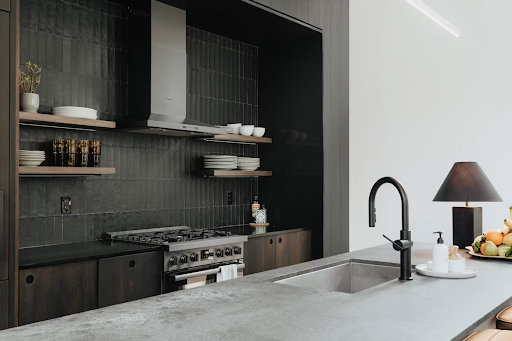
Keeping a cohesive kitchen style involves looking at how every surface works together, including the kitchen countertops. However, with so many countertop materials and design options to compare, it can feel overwhelming to narrow down the right choice.
Here are some helpful tips on how to choose kitchen countertops that work with your kitchen style instead of competing with it.
Identify the Mood You Want Your Kitchen to Create
Following kitchen design trends without considering your home’s existing style can make the countertop feel like a separate feature instead of part of the kitchen. Knowing the mood you want your kitchen to create makes it easier to choose a countertop that fits the space. Before choosing a countertop, think about whether you want the room to feel clean and modern, warm and welcoming, elegant and classic, or bold and high-end. Once you have that direction, it becomes much easier to choose colors, patterns, and finishes that work together and create a cohesive kitchen style.
Clashing colors and textures can make the kitchen feel chaotic rather than cohesive. A countertop should not feel like a separate design choice. It should help connect the cabinets, backsplash, flooring, and lighting into one complete space.
Test Countertop Samples Under Your Actual Lighting
Some professional countertop installers have showroom displays or larger samples that let you see how different materials look under real lighting. This is a great way to spot undertones, veining, or finishes that may not be obvious from a tiny sample.
When comparing kitchen countertop materials, bring samples home and place them beside the surfaces they’ll sit next to, including your cabinets, backsplash, flooring, and hardware. Check them a few times throughout the day instead of making a quick decision on the spot. A countertop can look soft and warm in natural light, then appear cooler, darker, or busier once the evening lights are on.
Match Your Countertop According to Your Cabinet’s Style, Not Just Color
Before choosing a countertop, take a closer look at your cabinet doors. Are they smooth and modern, simple and transitional, or more detailed and traditional? That detail matters. A busy countertop can work beautifully with plain cabinets, but it can clash with cabinets that already have strong grain, raised panels, or decorative trim.
To choose countertops that match your kitchen cabinets, consider the cabinet style as much as the cabinet color. The goal is not to make everything identical. It is to choose a surface that feels balanced with the shape, finish, and personality of the cabinets.
Think About How the Countertop Will Hold Up Day to Day
Kitchen countertops go through a lot on a normal day. Between cooking, cleaning, spills, water, heat, and heavy items being set down, the surface needs to be able to keep up. A beautiful countertop becomes a more functional kitchen upgrade when it fits your daily routine, not just your design style.
If your kitchen is busy every day, choose a material that can keep up with that pace. Quartz countertops are popular because they are easy to clean and do not need sealing. Granite and quartzite can be strong choices for homeowners who want natural stone, as long as they understand the care involved. Marble and butcher block can be beautiful, but they are better for people who are comfortable with marks, maintenance, and a more lived-in look.
Choose a Countertop That Adds the Right Amount of Contrast
Not everything needs to be completely cohesive and blended in. The right amount of contrast can change the whole feel of a kitchen. Light countertops can brighten up darker cabinets and make the space feel more open. On the other hand, darker countertops can add richness to white, cream, or light wood cabinets, especially in kitchens that already get good natural light.
For example, if you have navy or deep green cabinets, a soft white or lightly veined countertop can keep the room from feeling too heavy. If your cabinets are white and the walls are also light, a charcoal, warm gray, or deeper stone surface can give the kitchen more definition. With wood cabinets, contrast does not have to be dramatic. A creamy quartz, greige stone, or soft gray countertop can add just enough separation while still keeping the room warm and natural.
Choose an Edge That Matches the Kitchen’s Style
The countertop edge may seem like a small detail, but it can change how the whole surface feels. A simple eased edge usually works well in modern and transitional kitchens because it keeps the look clean and understated. It does not draw too much attention, which is helpful if the countertop already has strong veining or the cabinets have a lot of detail.
A thicker mitered edge can make an island feel more substantial, especially in a larger kitchen. It gives the countertop more presence without needing a busier pattern. Decorative edges, like ogee or bevel styles, can look beautiful in traditional kitchens, but they may feel out of place if the rest of the room has sleek cabinets and minimal hardware.
Use Hardware and Fixtures to Tie Everything Together
Hardware, faucets, and light fixtures can do a lot to connect your countertop with the rest of the kitchen. Warm-toned veining often feels more at home when there are brass, bronze, or champagne accents nearby. Cooler countertop patterns, especially gray or charcoal movement, usually pair well with nickel, chrome, stainless steel, or matte black finishes.
With that said, you don’t have to necessarily match every metal finish in the kitchen. In many kitchens, a little variation looks more natural. The important thing is to create some connection between the finishes. A countertop with both warm and cool movement can help brass hardware feel at home beside a stainless faucet or nickel light fixture.
Final Takeaways
The right countertop should feel like it belongs in the kitchen, not like it was chosen separately from everything else. That means looking at how it works with the cabinet style, the lighting, the backsplash, the hardware, and the overall mood of the room. Small choices, like the edge profile or the amount of veining, can make a big difference in whether the final design feels calm, bold, warm, or polished.
How much effort you’re willing to make to maintain your countertops should be part of your final decision too. A countertop is one of the most used surfaces in the kitchen, so the best choice is one that complements the design and still feels practical years after it is installed.


