

Water has a quiet way of finding weaknesses no homeowner ever planned for. A slow seep behind a wall, a puddle that keeps returning after every storm, or a damp corner in a rarely used room can all signal trouble that grows more expensive the longer it sits. Most water damage does not arrive in a single dramatic event. It builds up through small oversights, postponed repairs, and routines that quietly stop working. The good news is that reducing the risk does not require a full renovation or a heavy investment. It mostly requires attention, consistency, and a willingness to address small issues before they expand into structural problems. The sections below walk through practical habits and improvements that protect a house from the inside out.
Keeping Water Away from the Lowest Areas of Your Property
Some of the most stubborn water problems happen below ground level, where rainwater and runoff naturally settle. Once moisture collects in a sump pit inside a basement or crawl space, it can lead to flooding, foundation stress, and long-term damage that quietly eats away at the value of the home. The dependable fix would be a professionally installed sump pump drainage for homes, which automatically removes the water gathering in that pit and pushes it through a discharge pipe to a safe drainage area. A custom-designed setup ties directly into the existing drainage system, switching on when the water level rises and shutting off once it drops. For households that deal with heavy rain or storm activity, this kind of system provides steady, on-demand protection where it matters most.
Inspecting the Roof Before the Weather Forces You To
The roof is the first surface that meets every drop of rain, yet it tends to be the last thing a homeowner looks at. Small issues like lifted shingles, loose flashing around vents, or cracked sealant near the chimney are easy to overlook from the ground, but they create entry points for water to travel into the attic and along interior walls. A simple walk around the house with binoculars after a storm can reveal a surprising amount. Pay attention to dark streaks, sagging spots, or pieces of roofing material on the lawn. Anything unusual is worth a closer look, ideally from a qualified roofer who can spot problems before they widen. Catching a single damaged shingle early is far cheaper than repairing a soaked ceiling later.
Cleaning Gutters and Downspouts on a Regular Schedule
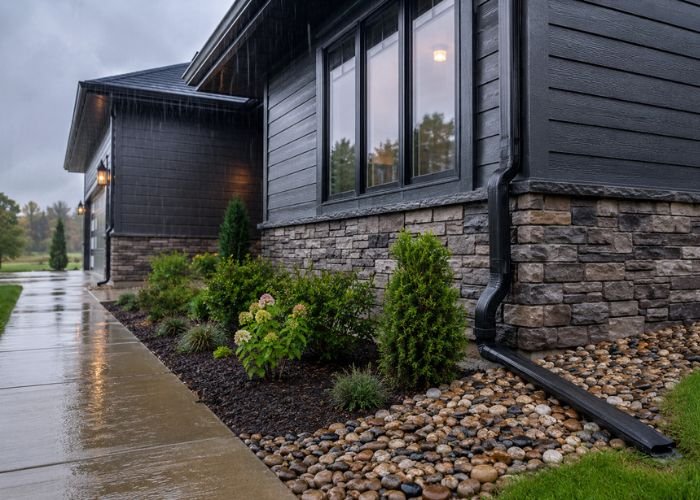
Gutters do an enormous amount of work, but only when they are clear. Leaves, twigs, and seed pods collect quickly, especially in fall and after windy weeks, and once a gutter clogs, water spills over the edge and runs down the exterior walls. Over time, that runoff seeps into the siding, soaks the trim, and pools near the foundation. Clearing gutters twice a year is a reasonable baseline for most homes, though properties surrounded by trees may need more frequent cleaning. Downspouts deserve equal attention. Make sure each one carries water several feet away from the house rather than dumping it right at the base. A simple extension or splash block can make a real difference during a heavy downpour.
Maintaining Plumbing Fixtures and Supply Lines
Indoor leaks rarely announce themselves with a flood. They usually begin as a faint hiss, a slightly higher water bill, or a small stain that appears one morning under the sink. Supply lines to washing machines, dishwashers, refrigerators, and toilets are common culprits because they sit out of sight for years. Replacing rubber hoses with braided stainless steel versions adds a meaningful layer of protection. Checking under every sink once a season takes only a few minutes and often catches early corrosion or moisture before it spreads. If the house will sit empty for more than a few days, shutting off the main water supply is a small precaution that has saved countless homeowners from returning to a soaked floor.
Sealing Windows, Doors, and Exterior Cracks
Even a well-built house develops small gaps as it settles. Caulk shrinks, weatherstripping flattens, and the seal around windows and doors loses its grip after a few seasons of temperature swings. These openings let rain creep into walls and floors during storms, often without leaving an obvious trail. Inspect window frames, door thresholds, and the joints where different materials meet, such as where siding meets brick. Refresh the caulk where it looks dry or cracked, and replace weatherstripping that no longer presses firmly against the frame. The same attention applies to exterior cracks in the foundation or stucco. Filling them early prevents water from working its way in and freezing, which only widens the damage.
Grading the Yard So Water Flows Away from the House
The slope of the land around a home plays a quiet but important role in keeping the interior dry. If the soil leans toward the foundation, every rainfall delivers water exactly where it should not go. Over time, that water saturates the soil, presses against the lower walls, and finds tiny openings to seep through. Walk the perimeter of the house and look for low spots, eroded patches, or areas where mulch has shifted. Building up the soil so it slopes gently away from the foundation, ideally several inches over the first few feet, redirects rainfall outward.
Paying Attention to Appliances That Use Water Daily
Washing machines, water heaters, dishwashers, and ice makers run so reliably that most people forget they can fail. A water heater near the end of its lifespan may start to rust quietly from the inside, and a worn dishwasher gasket can release water onto the floor without any warning sound. Knowing the age of each appliance and replacing parts before they reach their limit reduces the chance of an unexpected mess. Placing drip pans under appliances on upper floors adds another layer of insurance. Smart water sensors are also worth considering, as they alert homeowners the moment moisture appears in places it should not be, often early enough to prevent serious damage.


