

Key Take a ways
- Do not enter a fire-damaged home until local officials say it is safe.
- Put people, pets, medical needs, and temporary shelter ahead of belongings.
- Take photos and make detailed lists before moving or discarding damaged items.
- Smoke, soot, water, and damaged utilities can affect rooms far from the fire.
- Careful inspections, documentation, and qualified repairs can make recovery more manageable.
Table Of Contents
- What To Do In The First Few Hours
- How To Know When It Is Safe To Return
- Finding Temporary Housing And Essential Supplies
- Documenting Damage For Insurance
- Why Smoke And Soot Need Prompt Attention
- What Can Be Saved After A Fire?
- Planning Cleaning, Repairs, And Rebuilding
- Supporting Children, Older Adults, And Pets
- Common Mistakes To Avoid
- Common Questions About Fire Recovery
- Conclusion
A house fire can turn an ordinary day into a series of urgent decisions. After everyone is safe, the next steps often involve finding a place to stay, notifying an insurer, protecting the property, and deciding what can be cleaned or saved. A qualified fire damage contractor can help assess the scope of damage and organize restoration work, but immediate safety should always come first.
Recovery rarely happens all at once. It is usually a process of stabilizing the home, documenting losses, addressing moisture and smoke residue, and rebuilding carefully. This checklist can help homeowners focus on the most important tasks in the right order.
1. What To Do In The First Few Hours
Personal safety matters more than documents, clothes, or valuables. Call 911 if there is an active emergency or if anyone needs medical attention. Move household members and pets to a safe place, notify close relatives that everyone is safe, and follow instructions from firefighters, police, utility providers, and local officials. Do not go back inside to retrieve belongings. The American Red Cross home fire recovery guide also recommends remaining out of a damaged home until fire authorities approve re-entry.
2. How To Know When It Is Safe To Return
A home can look stable after a fire while still containing serious hazards. Heat may weaken framing, floors, stairs, ceilings, and roofing. Water from firefighting efforts can collect around electrical equipment, while damaged gas lines or wiring may create additional danger. Return only after appropriate officials say it is safe, and keep children and pets away from the property until then. From a safe distance, watch for sagging materials, broken utility lines, loose exterior walls, and standing water.
3. Finding Temporary Housing And Essential Supplies
If the home cannot be occupied, make a simple plan for tonight, the coming week, and the next month. Contact the insurance carrier to ask about additional living expense coverage, including hotels, meals, transportation, pet boarding, and replacement essentials. Keep every receipt. Create a short needs list for each person, including medications, glasses, mobility items, work supplies, school materials, clothing, and pet food. Local relief organizations may also help with shelter, food, and basic necessities.
4. Documenting Damage For Insurance
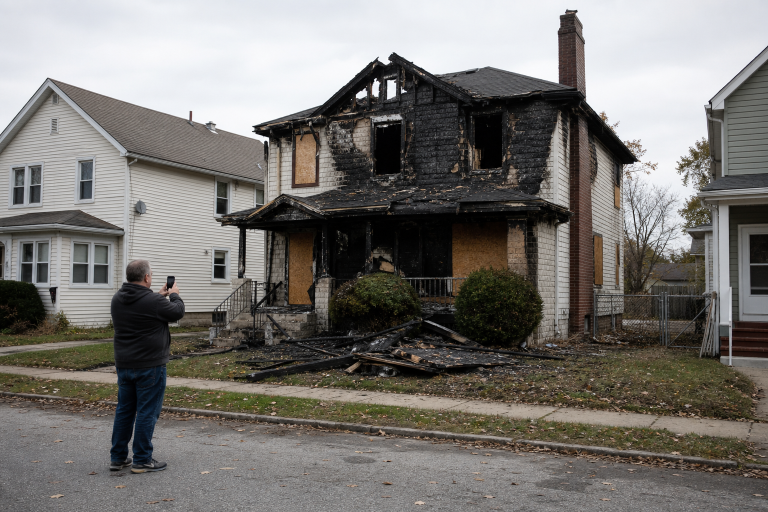
Document damage before major cleanup begins whenever it is safe to do so. Take wide photos of the exterior and every affected room, then capture close-ups of soot, water damage, burned materials, damaged appliances, and broken systems. Make a room-by-room inventory with item descriptions, approximate age, brand, purchase date, and estimated replacement cost when known. Keep claim numbers, reports, estimates, emails, and receipts together in a digital folder and a paper file. Do not discard damaged possessions unless they present an immediate health or safety risk or the insurer approves disposal.
5. Why Smoke And Soot Need Prompt Attention
Fire damage extends beyond what was burned. Smoke can travel through wall cavities, insulation, ductwork, furniture, fabrics, and stored belongings. Soot may leave oily residue that stains walls, ceilings, metal, and textiles, while smoke odor can persist even after visible debris is removed. Firefighting water can also introduce moisture concerns, corrosion, and mold risk. Avoid turning on heating and cooling equipment until it has been inspected, since a contaminated system may circulate particles and odors through other rooms.
6. What Can Be Saved After A Fire?
Salvage decisions depend on the item’s material, level of contamination, value, and sentimental importance. Food, beverages, medicine, cosmetics, children’s toys, and pet supplies exposed to heat, smoke, or soot often need to be discarded. Clothing, bedding, rugs, upholstered furniture, electronics, books, photographs, and artwork may need specialized evaluation. For example, a heavily damaged sofa may not be practical to restore, while a photo album could be worth careful preservation. Photograph all items before cleaning or disposal.
7. Planning Cleaning, Repairs, And Rebuilding
Restoration works best as a sequence of manageable stages:
- Secure the property: Protect openings, remaining belongings, and utilities.
- Inspect the structure: Assess roofing, framing, floors, walls, and foundations.
- Address water and moisture: Dry affected materials and check concealed areas.
- Remove unsafe materials: Dispose of items that cannot be safely cleaned or repaired.
- Clean smoke residue: Treat surfaces, contents, odor sources, and ventilation systems.
- Repair building systems: Inspect electrical, plumbing, heating, and ventilation components.
- Rebuild and inspect: Complete repairs, permits, and final safety checks.
The U.S. Fire Administration’s post-fire recovery resources offer additional guidance for handling records, insurance matters, salvage decisions, and the path back to normal routines.
8. Supporting Children, Older Adults, And Pets
A fire affects more than the structure. Children may become fearful, have trouble sleeping, or worry about another emergency. Offer simple, honest explanations and maintain routines where possible. Older adults may need help replacing medication, identification, mobility equipment, or medical supplies. Pets that were near smoke or flames should be evaluated by a veterinarian if there are signs of coughing, breathing difficulty, burns, or unusual behavior. Counseling and community support can be valuable throughout the recovery process.
9. Common Mistakes To Avoid
- Re-entering before local authorities approve it.
- Cleaning heavy soot without proper protective equipment.
- Turning on damaged electrical, gas, or heating systems.
- Discarding belongings before documenting them for a claim.
- Forgetting to save receipts for temporary living expenses.
- Ignoring lingering smoke odor after visible damage is removed.
- Trying to perform major structural, electrical, or hazardous-material work alone.
10. Common Questions About Fire Recovery
How Soon Should The Insurance Company Be Contacted?
Contact the insurer as soon as possible. Ask what must be documented, what emergency work is authorized, and whether an adjuster needs to inspect the property before cleanup or disposal.
Can A House Be Safe If Only One Room Burned?
Not necessarily. Heat, smoke, water, and utility damage can affect nearby and distant areas. A qualified inspection is the safest way to understand the full scope.
Should Smoke-Damaged Clothing Be Washed At Home?
Lightly affected fabrics may be cleaned, but heavily contaminated clothing may require specialty treatment or replacement. Avoid mixing smoke-damaged items with unaffected laundry.
How Long Does Fire Recovery Take?
The timeline depends on structural damage, permits, insurance decisions, material availability, and the extent of smoke and water damage. Smaller losses may take weeks, while major rebuilding can take much longer.
Conclusion
Recovering after a house fire begins with safety, followed by clear documentation and a practical plan. Take one stage at a time: secure temporary needs, preserve records, inspect the home, address smoke and moisture, and complete repairs carefully. With patience and the right support, a damaged home can move steadily toward becoming a safe, livable space again.


