Most homeowners spend months picking the right sofa, agonize over paint colors, and then hang a single small print above the couch and call it done. The walls don’t get the same attention as the furniture, and the result is a room that feels half-finished without anyone being able to say exactly why.
It’s a fixable problem. A feature wall – one wall treated as the visual anchor of the room – can change how a space feels more than almost any other decorating decision. The good news is you’ve got two realistic paths to get there: making something yourself, or buying a piece scaled to actually fit the wall. This guide covers both.
Why a feature wall makes a bigger difference than you’d expect
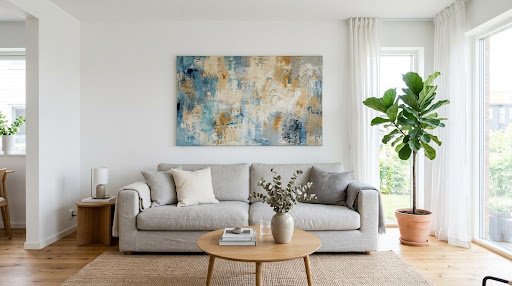
A feature wall works because it gives the eye somewhere to land. Without one, a room reads as a collection of objects rather than a composed space. That’s not a philosophical point – it’s a visual mechanics issue. When there’s no clear focal point, people tend to scan the room without settling anywhere, and the space feels unsettled as a result.
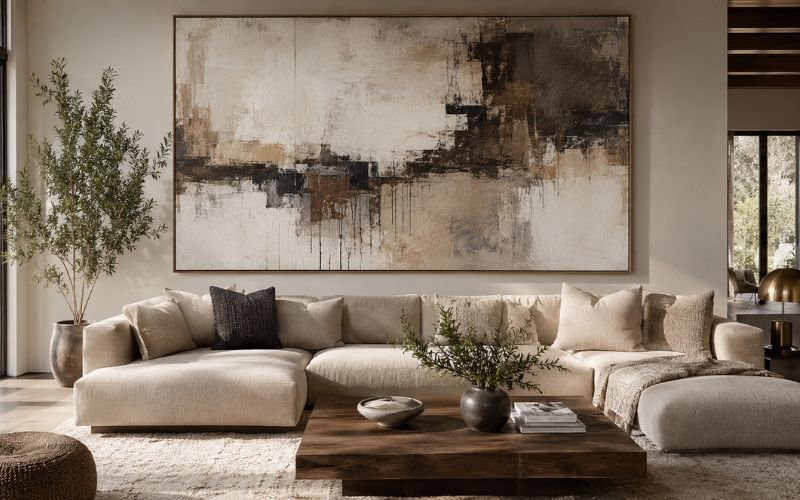
The scale rules here are worth knowing. Art should span roughly 60-75% of the width of the furniture below it – a sofa that’s seven feet wide needs a piece or grouping that runs between four and five feet across. The center of any piece should hang at 57-60 inches from the floor, which is the design industry’s standard eye-level measurement, per guidelines from ElephantStock’s interior design resource. These aren’t aesthetic preferences; they’re the difference between a wall that looks intentional and one that looks accidental.
Getting the scale right matters more than getting the style right. A correctly sized piece, even a simple one, reads as a deliberate design choice. An expensive piece hung too small on a big wall looks like an afterthought.
If you want a piece that’s truly one of a kind, numberartist.com carries large-canvas paint-by-numbers kits that produce finished artwork ready to hang – no art background needed, and the result looks nothing like a craft project when it’s up on the wall.
The DIY route: creating your own wall art with paint-by-numbers

Paint-by-numbers has had a real comeback, and the numbers back it up. According to Amra & Elma’s 2024 craft marketing research, nearly 71% of U.S. adults engaged in a craft project that year, and 86% of Gen Z identify as active crafters. Pinterest data cited by Accio’s 2025 trend report shows searches for “hand-painted wall patterns” rose 60% year-over-year – consumers are actively looking for handmade-looking art.
Modern kits are nothing like the small hobby sets sold in toy stores. Today’s options include large canvases, photo-to-painting customization, and designs with enough detail to hold up on a statement wall. The appeal isn’t just the finished product – completing a piece gives you something you made with your hands, which is a different experience from buying art. There’s a reason people hang their own paintings rather than prints of the same subject.
A few practical tips for displaying finished paint-by-numbers work:
- Stretch the canvas over a wooden frame for a gallery-ready look. Pre-stretched canvases that are already part of the kit can go straight onto the wall.
- Frame it if the canvas edges aren’t clean – a simple floater frame adds polish without covering the painting.
- Choose a kit subject that pulls from the colors already in the room. If your cushions and rug run warm ochre and rust, a landscape with similar tones will feel like it belongs. A cool-toned abstract in a warm room will fight the space.
The limitation worth acknowledging: paint-by-numbers takes time. A large canvas might take several weeks of evening sessions. If you want something on the wall by next month, the ready-made route makes more sense.
Choosing ready-made large wall art: what to look for
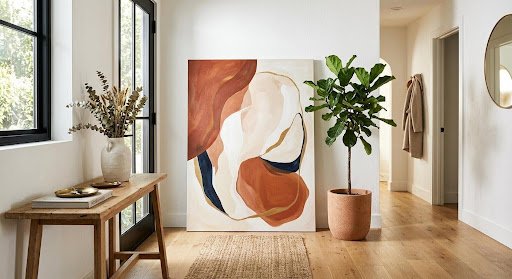
Not everyone wants to paint something, and that’s a perfectly sensible position. Ready-made large-format art has its own advantages – you see exactly what you’re getting, delivery is fast, and the range of styles available from independent artists has expanded significantly in recent years.
Size categories worth knowing before you shop: medium art runs roughly 12×16 to 18×24 inches, large from 24×36 to 30×40, and oversized starts at 36×48 and up. Oversized pieces are the right call for rooms with high ceilings, open-plan layouts, or any wall taller than nine feet. A 24×36 piece that would anchor a small bedroom will disappear on an open-plan living room wall.
The 2025-2026 consumer trend is toward “identity decor” – pieces that reflect something specific about the person living in the space, rather than generic compositions that could belong to anyone. According to Printful’s 2026 wall art trends report, this is pushing demand toward independent artists and handmade-feel work over mass-produced prints.
Canvas prints read warmer and more tactile than framed paper prints. For living rooms and bedrooms, canvas is usually the better call. Framed paper prints suit more formal spaces – a home office or a dining room with traditional furniture.
For rooms where you want real visual impact without picking up a brush, browsing collections of large wall pictures from independent artists is a practical starting point – you get work with a handmade quality that mass-market art doesn’t have.
How to match your art to your room without overthinking it
The most common mistake people make when choosing wall art isn’t picking the wrong style – it’s ignoring the colors already in the room. Art doesn’t need to match your decor exactly, but it needs to share at least one color from the existing palette to feel like it belongs. Pick up a hue from the rug, the cushions, or the curtains, and look for that tone in any piece you’re considering.
Mood is driven more by color temperature than by subject matter. Warm tones – reds, ochres, terracotta – make a room feel inviting and social. Cool tones like blues, greens, and grey pull a space toward calm. This matters most in bedrooms and home offices, where the wrong tone can subtly undermine the room’s purpose.
Style alignment is simpler than most decorating guides make it sound. Abstract art fits modern and minimalist interiors. Landscapes and botanical prints suit natural, organic spaces. Geometric patterns work in contemporary and Scandinavian-style rooms. You don’t need to be rigid about this – contrast can work – but when you’re unsure, matching the art’s style to the room’s existing character is the lower-risk call.
One rule that holds across almost every situation: go one size larger than your first instinct. Art that’s too small on a big wall always looks timid. The over-scaled piece that made you hesitate in the shop will look deliberate and confident on the wall. For more on this kind of calibrated decision-making across a whole room, the interior decorating principles laid out in our home styling guide are worth a read.
Hanging it right: the step most people skip
Getting the art right and then hanging it badly is more common than it sounds. A few things that make a real difference:
Use two anchor points for any piece wider than 24 inches. A single hook lets the frame pivot over time – two hooks keep it level. For heavy pieces (anything over 15 pounds), locate the wall studs and use screws rather than adhesive strips or hollow-wall anchors.
Leave 6-10 inches between the top of the sofa or furniture below the art and the bottom of the frame. Less than six inches, and the art feels like it’s sitting on the furniture. More than ten, and the connection between the two breaks – they start to look unrelated.
For gallery walls, keep frame spacing consistent at 2-4 inches and tie the arrangement together with a shared element – a consistent frame color, a common subject matter, or a unified color palette across the pieces. Random collections of unrelated frames in different sizes tend to read as clutter rather than curation.
Lighting is the part people almost always skip. A picture light mounted above a canvas or a directional spotlight aimed at the piece from a floor lamp or ceiling track dramatically changes how the art reads, especially in the evening. It’s the difference between a piece that’s visible and a piece that’s actually seen.
You can read more about how these home styling fundamentals apply across the rest of the room – getting the wall right is one piece of a larger system.
Putting it together
Two paths, one goal. DIY paint-by-numbers gives you art that’s genuinely personal – something made by your hands with a subject and palette you chose. The process takes time, but the finished piece carries context that bought art can’t. Ready-made large prints get there faster and give you exactly what you see before you commit.
Neither is the better choice in the abstract. The right one depends on your timeline and whether you want the making or the having. What doesn’t work is staying on the fence and leaving the wall blank for another six months.
Pick a wall. Measure the furniture below it. Decide whether you’re painting or buying. The rest follows from there.