
Most people treat concrete as the boring, inert part of a renovation. It’s the floor you’re about to drill through, the basement wall you’re cutting a new window into, the patio you’re breaking up to bury a drainage line. The assumption is simple: pick a spot, start the tool.
That assumption causes tens of thousands of dollars in damage every year. Concrete isn’t empty. Inside almost every slab, wall, and foundation you’ll find a web of things you can’t see from the surface – rebar, post-tension cables under enormous tension, electrical conduit, plumbing, gas lines, and communication runs. Any of them can be severed by a drill bit or a concrete saw. Some failures are just expensive. Others are genuinely dangerous.
This article walks through what’s inside concrete, what scanning technology does, when you need it as a homeowner, and what it actually costs to skip it. If you have a renovation coming up that touches any concrete surface, read this before you start.
What concrete scanning is and why you need it before any home project
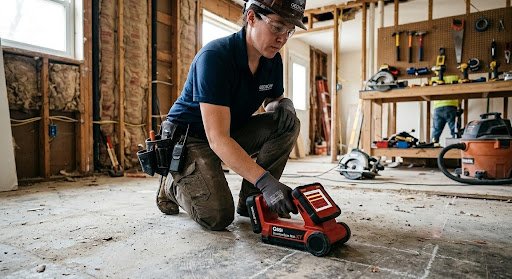
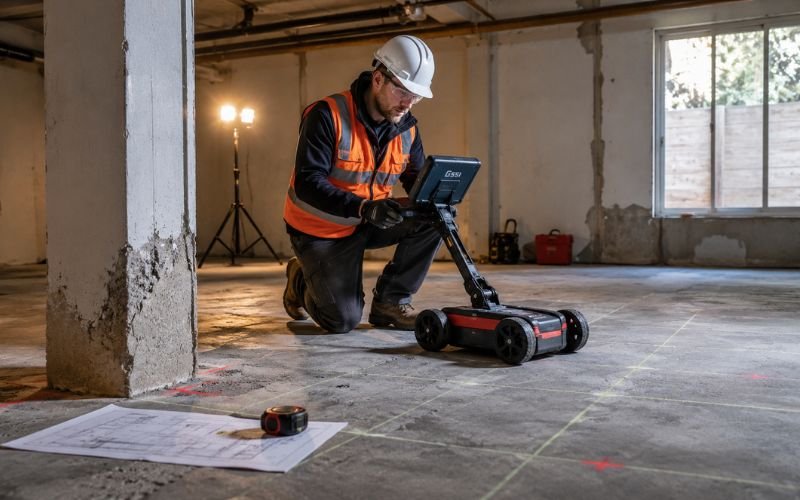
Ground-penetrating radar – GPR for short – is the technology that makes concrete scanning possible. A handheld device sends radio waves into the slab. When those waves hit something embedded inside – a pipe, a cable, a rebar rod – they bounce back. The technician reads the reflected signal and builds a picture of what’s underneath the surface, without drilling a single test hole.
It’s non-destructive, it involves no radiation, and it works on floors, walls, and ceilings. According to SoftDig Utility Locating, a skilled GPR operator can achieve up to 90% accuracy with positional readings within about a quarter of an inch. That’s precise enough to let a contractor know exactly where to drill and where to absolutely avoid.
If your project involves drilling, cutting, coring, or breaking through any concrete surface, finding concrete scanning services near me is the right first move – not an afterthought you come back to after something goes wrong. The cost of a scan is a fraction of what it costs to repair the damage from hitting the wrong thing.
One thing worth knowing: blueprints aren’t a substitute for a scan. If you’re comfortable reading your existing house blueprints, you’ll already know that drawings show what was planned, not necessarily what was built. Utilities shift. Previous owners run unlicensed lines. Concrete work done decades ago may not match any drawing you can find.
What’s actually hidden inside concrete
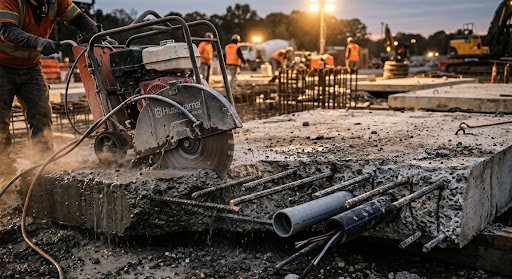
Rebar is the most common thing people know about – steel reinforcing bars that give the concrete tensile strength. Cutting through rebar during a renovation weakens the structural integrity of that section of slab or wall, sometimes enough to require an engineer’s assessment before work can continue.
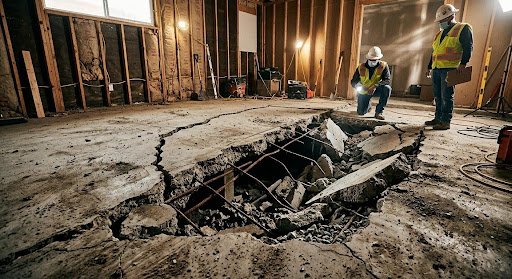
Post-tension cables are a different problem entirely. These are steel tendons that were placed under high tension when the concrete was poured – they’re what keep modern thin slabs from cracking. Accidentally severing one releases that tension violently. The failure can cause the cable to whip, crack the slab across a wide area, and trigger a structural emergency that shuts down the whole project.
Below that, you’ll often find electrical conduit running through the concrete rather than above it. Cutting into a live conduit doesn’t just damage the wiring – it can cause electrocution and knock out power to the building. Water and gas lines are sometimes buried in or under slabs, especially in older construction where plumbing was routed in ways that wouldn’t be done today.
According to GPRS (Ground Penetrating Radar Systems), even experienced contractors can’t reliably identify embedded utilities by eye. That’s not a training gap – it’s just physics. There’s no way to see inside cured concrete without equipment.
When does a homeowner actually need concrete scanning?
Scanning isn’t something reserved for commercial construction sites. There are plenty of projects that homeowners take on where it applies directly.
Adding a bathroom in an existing space often requires cutting through the floor slab to run new drain lines. Installing anchor bolts for shelving, equipment, or safety railings means drilling into concrete walls or floors. Breaking up a driveway or patio for landscaping or hardscaping involves using a saw or jackhammer to cut through material that may have conduit or irrigation lines running beneath it.
Basement renovations are another common trigger. Cutting a new window or door opening in a foundation wall, drilling for new electrical or HVAC penetrations, or pouring a new interior footing all warrant a scan first.
If you’re planning a more substantial project, the risk compounds. When you’re planning a home extension, new footings and floor cuts are almost always involved – and those concrete pads may sit adjacent to existing utility runs you haven’t accounted for.
The short version: if power tools are going into concrete, a scan should be on your pre-project checklist.
What happens if you skip it
The financial case is stark. According to GPRS, citing industry data, the average total cost of a single utility strike runs to $56,000 – that figure includes downtime, emergency repairs, medical costs if anyone is injured, and potential neighborhood evacuations when gas or power is affected.
GPR scanning typically costs between $1,000 and $5,000 per day, depending on project complexity. That’s the math most homeowners don’t run until it’s too late.
The Concrete Sawing and Drilling Association (CSDA) found, via data cited by Safe2Core, that scanning before coring and cutting can reduce unplanned repair costs by up to 80%. Safe2Core also documented a near-miss case involving a struck conduit that would have cost $45,000 and a two-week work shutdown to resolve.
Hitting a post-tension cable doesn’t just cost money – it can make your floor structurally unsafe until an engineer signs off on repairs. Depending on the severity, that can mean the affected area is unusable for weeks while a remediation plan is developed and implemented.
Before you start any concrete project: a simple checklist
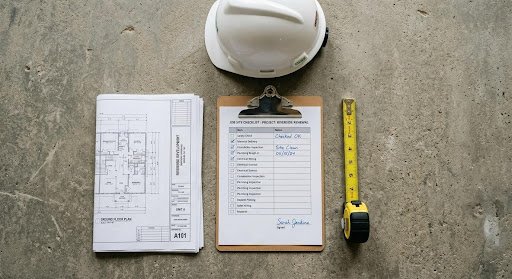
None of this requires special expertise. It just requires doing the steps in the right order.
First, figure out whether your project actually touches concrete. Drilling a hole in drywall is different from drilling into a concrete basement wall. If the answer is yes, the following steps apply.
Second, pull whatever drawings you have. Blueprints, renovation permits, and as-built plans from previous owners – gather them. They’re a starting point. They’ll tell you what was planned. They won’t tell you what actually happened over the years.
Third, call 811 before any outdoor excavation. This is legally required in all 50 states. The 811 service marks public utility lines – gas, electric, water, sewer – from the street to your property meter. It doesn’t cover private utilities on your property, which is where concrete scanning fills the gap.
Fourth, hire a concrete scanning professional to scan the specific area you’re cutting into. Get this done before any tools touch the slab. The scan results should come with a documented map of what’s underneath, which your contractor can reference throughout the job.
For anyone who wants a more thorough framework for managing construction risks, the process of understanding construction hazard planning – specifically activity hazard analysis – is what professional crews use to identify and document exactly these kinds of hidden-danger scenarios before work begins.
The OSHA/CSDA alliance has also published guidance on safety requirements for concrete cutting and drilling operations, which is worth reviewing if your contractor will be doing significant saw work.
A small step that prevents big mistakes
Concrete renovation is one of those areas where the gap between “this looks simple” and “this got very complicated” closes fast. There’s no surface-level way to know what’s inside a slab. That’s not a failure of common sense – it’s just the nature of the material.
The tools to know what’s there before you start are available, reasonably priced relative to the risk, and don’t require you to be a construction expert to use. You hire a qualified GPR service, they scan your project area, they give you a map, and your contractor knows where to work safely.
Before your next project that touches concrete, run through the checklist above. Make the scan the first item, not the last one you think of after something goes wrong.


