
A backyard pool changes everything about summer. It’s where your kids spend July afternoons. It’s the reason friends suddenly want to come to your place on weekends. It turns a regular house into the one everyone wants to be at.
The magic fades fast when you see the price tag.
Most homeowners know pools aren’t cheap, but the real numbers catch them off guard. The good news: you don’t need to write a six-figure check to make it happen. There are smart ways to spread the cost over time without wrecking your budget. If you’ve been daydreaming about a pool, you’ll know exactly what you’re signing up for by the time you finish reading.
What a Pool Actually Costs in 2026
Angi’s 2026 Cost Guide puts the national average for an in-ground pool at $65,909. That’s not pocket change. Most homeowners spend somewhere between $44,499 and $87,349, depending on size, materials, and where they live.
Those averages hide big differences between pool types. A vinyl liner pool runs $40,000 to $75,000. Fiberglass comes in higher, typically $55,000 to $100,000. Concrete pools sit at the top of the range – $65,000 to $120,000 according to Angi’s data. Concrete lasts longer and you can shape it any way you want, but you’ll pay for that flexibility.
Here’s the thing most pool buyers figure out fast: very few people pay cash. That’s where swimming pool finance comes in – spreading the cost over years instead of draining your savings in one shot.
If those numbers make your eyes water, above-ground pools offer a much softer landing. The average above-ground installation costs about $4,000. You sacrifice some permanence and prestige, but you get the same summer fun at roughly 6% of the cost. For many families, that math works.
How Swimming Pool Finance Works
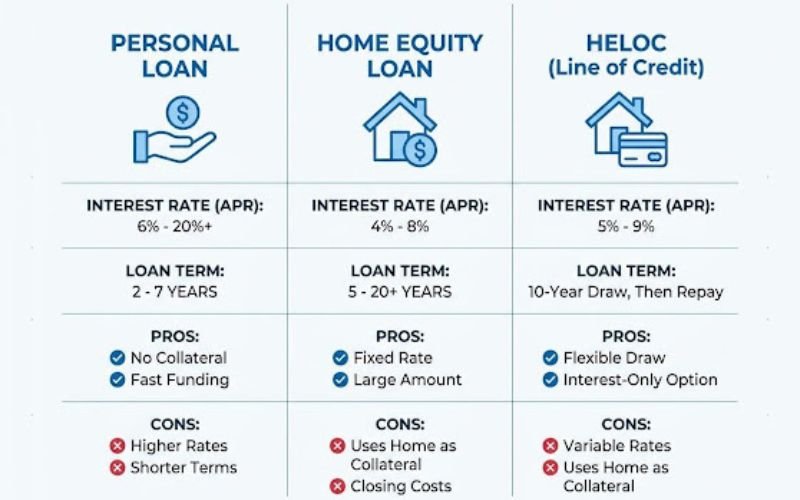
Lenders offer three main paths for pool financing.
Personal loans are the fastest option. You apply online, get approved in a day or two, and the money lands in your account within a week. NerdWallet’s 2026 review of pool financing options reports rates starting around 6.49% for borrowers with excellent credit. On the high end, rates can climb to 36% for borrowers with weaker credit. The big advantage: no collateral. The lender can’t take your house if you miss payments.
Home equity loans work differently. You borrow against the value you’ve built up in your home. HFS Financial explains that rates typically run between 7% and 9% for well-qualified borrowers – lower than most personal loans. The catch is your house backs the loan. If things go sideways, you risk foreclosure. You also need enough equity to qualify, which rules out recent homebuyers who haven’t built much yet.
HELOCs, or home equity lines of credit, give you the most flexibility. Instead of getting a lump sum, you draw money as you need it during the construction process. Rates are usually variable, so your payment can change over time. HELOCs make sense when your pool project will stretch across several months and you don’t want to pay interest on money you haven’t spent yet.
Hidden Costs Most Buyers Overlook
The sticker price for the pool itself is just the beginning. Smart buyers budget for what comes next.
Annual maintenance is the big one. HomeGuide, cited by RubyHome’s 2026 swimming pool statistics,estimates yearly upkeep between $3,030 and $5,995. That covers chemicals, cleaning equipment, and seasonal opening and closing. Skip it for a month and you’ll have a green swamp instead of a pool.
Then there’s everything around the pool. Decking, fencing, and landscaping easily add $10,000 to $30,000 to your total. Most towns require safety fencing by code, so that’s not optional. You might want a patio, some lighting, and maybe an outdoor kitchen area. These extras add up fast.
Your homeowner’s insurance will likely go up, too. Insurers see a pool as a liability risk. Expect to pay more each year, and plan on higher utility bills for running the pump and heater. If you’re budgeting for the pool itself but ignoring these ongoing costs, you’re leaving a big hole in your plan. Curb appeal upgrades that add value to your home are worth considering alongside your pool investment – a well-landscaped pool area can make the whole project feel more intentional.
Does a Pool Pay Off?
Financially speaking, the answer is complicated. You won’t get every dollar back, but you won’t get nothing either.
Angi estimates that a pool can return up to 56% of its cost when you sell. RubyHome’s 2026 report suggests pools boost home value by about 7% on average. Those numbers matter more in warm climates – a pool in Phoenix pays back faster than a pool in Minneapolis. In some Florida and Texas neighborhoods, buyers expect a pool and will skip houses that don’t have one.
Most pool owners don’t build for the ROI, though. They build because summers are hot and pools make life better. If you want to maximize your outdoor space regardless of resale value, outdoor design trends that add curb appeal and home value can help you create a yard that works hard for you.
For what it’s worth: I think treating a pool as a pure investment misses the point. You don’t ask about the ROI on a family vacation. A pool is part lifestyle purchase, part home improvement. The numbers matter, but so do the summer afternoons.
Choosing the Right Loan for Your Pool
Start with your credit score. If it’s strong – say, above 700 – you’ll qualify for competitive rates across all three loan types. If your credit needs work, a personal loan might be your only option, and you’ll pay a higher rate for it.
Next, look at your home equity. Borrowers with 20% or more equity built up can access those lower-rate home equity loans and HELOCs. If you bought recently and your down payment was modest, personal loans are probably your path.
Timeline matters, too. Need the pool this summer? Personal loans fund fastest. Building a custom concrete pool that’ll take six months? A HELOC lets you draw funds as each phase completes, so you’re not paying interest on the full amount while contractors are still excavating.
Pre-qualify with at least three lenders before committing. Rates vary meaningfully, even for the same borrower on the same day. A difference of two percentage points on a $65,000 loan adds up to thousands over the life of the loan. If your backyard is on the smaller side, ways to make a small backyard feel bigger without doing too much can help you scale down the pool and the price tag.
Is Pool Financing Right for You?
Pool financing isn’t complicated, but it rewards people who do their homework. Know your credit score before you apply. Understand the full cost – not just the pool shell but maintenance, fencing, and higher insurance. Compare at least three lenders and don’t take the first rate you’re offered.
A pool is one of the best things you’ll ever do to your home. Just make sure the payments don’t outlive the summer fun.


