
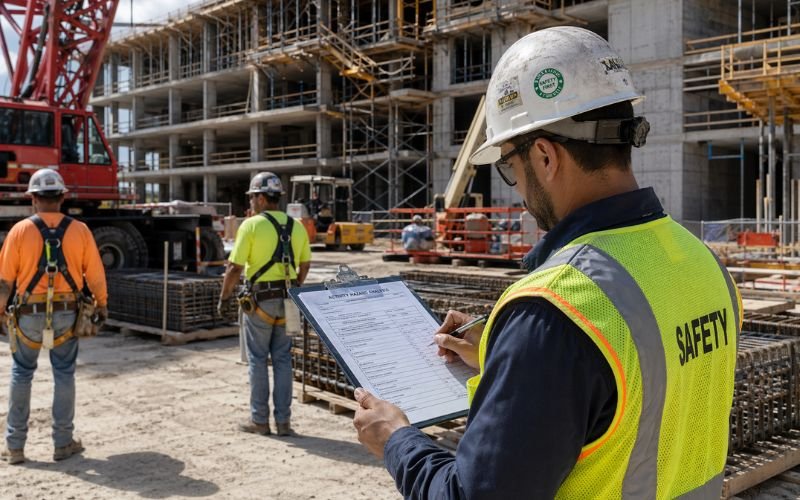
Construction sites are among the most hazardous workplaces in the world. According to safety reports, millions of workplace injuries occur every year—and construction consistently ranks among the highest-risk industries.
That’s why proactive safety planning is critical. One of the most effective tools used by construction professionals is an Activity Hazard Analysis (AHA).
In simple terms, an Activity Hazard Analysis (AHA) is a structured safety document that identifies potential risks in a specific construction activity and outlines control measures before work begins.
In this guide, you’ll learn what AHA means, why it matters, how to create one step by step, real-world examples, and a ready-to-use template you can copy.
What Is an Activity Hazard Analysis (AHA)?
An Activity Hazard Analysis (AHA) is a safety planning process used to break down a construction activity into individual steps, identify hazards at each stage, and define controls to reduce or eliminate risk.
It is sometimes referred to as a Job Hazard Analysis (JHA), but in construction, AHA is typically more detailed and activity-specific.
The primary goal of an AHA is simple: prevent accidents before they happen by identifying risks in advance and implementing safety measures.
Why AHA Is Important in Construction
An AHA is more than a compliance document—it directly impacts worker safety and project success.
- Helps prevent workplace injuries and fatalities
- Improves compliance with safety regulations
- Reduces project delays caused by incidents
- Enhances communication between workers and supervisors
- Builds a proactive safety culture
Studies from safety organizations suggest that structured hazard analysis processes can significantly reduce job-site incidents when consistently applied.
Regulatory Context (OSHA & Industry Standards)
While AHA is widely used in construction, its importance becomes even clearer when looking at safety regulations.
- In the United States, AHAs are required on many government projects, especially under the U.S. Army Corps of Engineers (USACE) safety manual (EM 385-1-1)
- AHA aligns closely with OSHA construction safety standards (29 CFR 1926)
- Internationally, similar processes exist, such as Risk Assessment Method Statements (RAMS) in the UK
Even when not legally required, AHAs are considered a best practice across the construction industry.
Key Components of an AHA Document
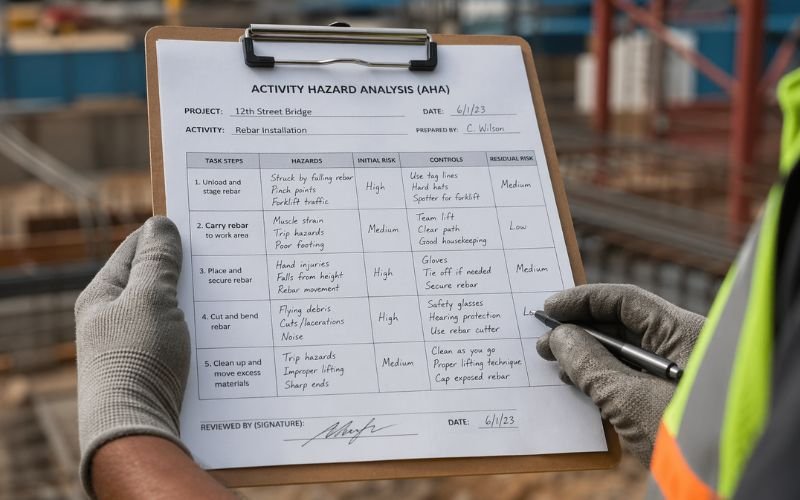
A strong AHA document follows a structured format to ensure nothing is overlooked.
Typical Components Include:
- Task steps (job breakdown)
- Potential hazards for each step
- Risk level (severity and likelihood)
- Control measures to reduce risk
- Required PPE (Personal Protective Equipment)
- Responsible person or supervisor
Sample AHA Table (Copy & Use)
| Step | Potential Hazards | Risk Level | Controls | PPE | Responsible |
| Ladder setup | Falls, instability | High | Secure base, proper angle (4:1) | Helmet, harness | Supervisor |
| Material lifting | Back injury, dropping | Medium | Use lifting tools, team lift | Gloves, boots | Worker |
This simple structure ensures clarity and consistency across teams.
AHA vs JHA in Construction
Although closely related, AHA and JHA are not exactly the same.
| Aspect | AHA | JHA |
| Focus | Specific activities | Broader job roles |
| Detail Level | High (construction-focused) | Moderate |
| Common Use | Construction & gov projects | General industries |
In construction environments, AHA is preferred because it provides more detailed, activity-level risk assessment.
How to Create an Activity Hazard Analysis (Step-by-Step)
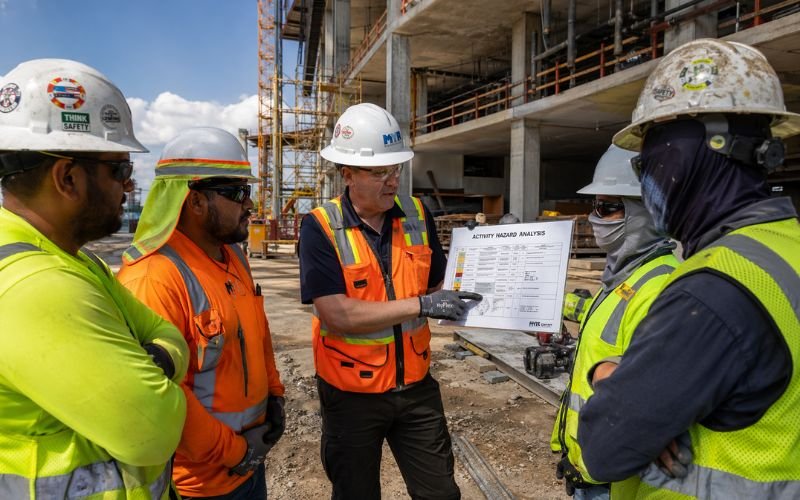
Creating an AHA is straightforward when broken into steps.
Step 1: Break the Job Into Tasks
Divide the activity into clear steps. For example, roofing includes setup, material handling, and installation.
Step 2: Identify Hazards
List all possible risks for each step—falls, electrical hazards, equipment issues, etc.
Step 3: Assess Risk Levels
Evaluate how severe each hazard is and how likely it is to occur.
Step 4: Define Control Measures
Add solutions such as PPE, engineering controls, or safer procedures.
Step 5: Assign Responsibilities
Clearly define who is responsible for implementing safety measures.
Step 6: Review and Communicate
Discuss the AHA with workers before starting the task.
When Should You Update an AHA?
- Change in weather conditions
- New workers or subcontractors
- Equipment changes
- New hazards identified
- After an incident or near miss
Free AHA Template (Ready to Use)
You can quickly create your own AHA using this simple format.
What to Include:
- Project and activity name
- Task breakdown
- Hazard identification
- Control measures
- PPE checklist
- Sign-off section
How to Use It:
- Enter project details
- Break down the activity
- Identify hazards per step
- Add controls and assign roles
- Review with your team
You can easily recreate this in Excel, Word, or any site safety software.
Real Examples of AHA in Construction
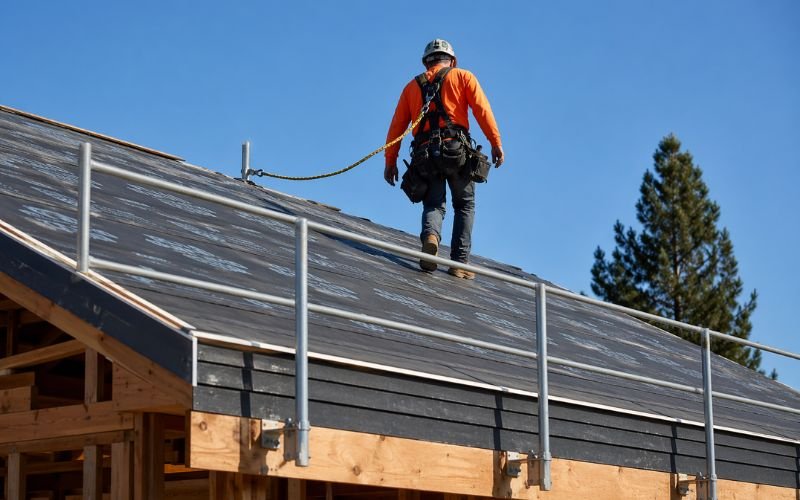
Example 1: Roofing Work
- Hazards: Falls, slippery surfaces, weather exposure
- Controls: Safety harnesses, guardrails, weather monitoring
Before AHA: Workers operate without fall protection → high fall risk
After AHA: Harness and guardrails installed → risk significantly reduced
Example 2: Electrical Work
- Hazards: Electric shock, arc flash, fire
- Controls: Lockout/tagout procedures, insulated tools, PPE
Before AHA: Live wires handled without isolation
After AHA: Proper lockout/tagout ensures zero energy exposure
Example 3: Excavation Work
- Hazards: Trench collapse, falling debris
- Controls: Trench boxes, soil testing, proper sloping
Before AHA: Unprotected trench → collapse risk
After AHA: Support systems installed → safer working conditions
Common Mistakes to Avoid in AHA
- Not involving workers in planning
- Using generic hazard lists without site-specific details
- Failing to update the AHA regularly
- Poor communication with crew members
- Ignoring smaller risks that can escalate
Avoiding these mistakes makes your AHA far more effective.
Best Practices for Effective AHA Implementation
- Involve workers who perform the tasks daily
- Conduct regular reviews and updates
- Keep AHAs accessible on-site
- Use toolbox talks for communication
- Encourage reporting of new hazards
Pro Tips to Improve Construction Site Safety
- Combine AHA with daily safety inspections
- Use digital tools like SafetyCulture or Procore for real-time updates
- Provide ongoing safety training
- Maintain clean and organized work areas
- Track incidents and continuously improve
Modern tools can make AHA faster, more accurate, and easier to manage across teams.
FAQs About AHA in Construction
What does AHA stand for in construction?
AHA stands for Activity Hazard Analysis. It is used to identify and control risks before construction work begins.
Is AHA the same as JHA?
No. AHA is more detailed and focuses on specific activities, while JHA is broader.
Who prepares an AHA?
Usually site supervisors, safety officers, or project managers with input from workers.
How often should an AHA be updated?
Whenever conditions change, such as new equipment, weather changes, or after incidents.
Is AHA required by OSHA?
OSHA does not always require AHA specifically, but hazard analysis is strongly recommended. AHAs are mandatory on certain federal and government construction projects.
Conclusion
An Activity Hazard Analysis (AHA) is one of the most powerful tools for improving construction site safety. By identifying risks before work begins and applying proper control measures, you can prevent accidents, protect workers, and keep projects on schedule.
Whether you’re managing a large construction project or a small crew, implementing AHA consistently can make a measurable difference in safety and efficiency.
Start with a simple template, involve your team, and make hazard analysis part of your daily workflow.