
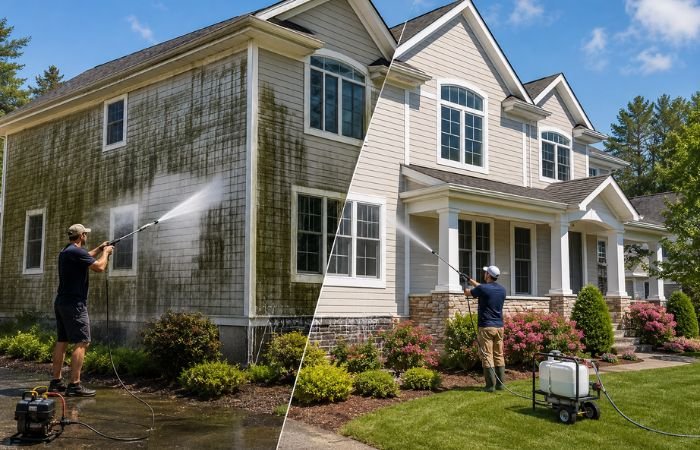
If your siding, brick, or stucco has developed dark streaks, green film, or stubborn stains, it’s tempting to reach for the highest pressure setting you can find.
But more pressure isn’t always the answer. In a lot of cases, it can actually damage your home instead of fixing the problem.
The Problem With High-Pressure Cleaning
Blasting exterior surfaces with high water pressure can strip paint, crack vinyl siding, and force water behind siding and window seals. It can even etch brick or stucco if the pressure is too strong.
Worse, it often doesn’t solve the real problem. High pressure can knock off the algae or mold you can see, while leaving the roots buried in tiny cracks and pores completely untouched.
That’s why stains often creep back within a few months, sometimes worse than before.
How Soft Washing Actually Works
Soft washing takes a different approach. Instead of relying on force, it uses specially formulated cleaning solutions applied at very low pressure, often no stronger than a garden hose, to do the heavy lifting.
Here’s the simple version of what’s happening:
- Water on its own tends to bead up rather than spread out, so it sits on top of a surface without really soaking into cracks, grooves, or textured siding
- Adding a cleaning solution changes that, allowing the liquid to spread out evenly and work its way into small gaps and pores where algae and mold spores are hiding
- The solution breaks down grime at the source, lifting oil, mold, and algae away from the surface so they can be rinsed off gently, rather than blasted off with force
The result is a deeper, more complete clean, without the risk of damaging paint, siding, or seals.
Why This Matters for Mold and Algae Specifically
High-pressure washing often removes the visible surface growth but leaves living spores behind inside the material.
Soft washing is designed to address the growth itself, not just what’s visible on top. That’s why homes cleaned this way tend to stay cleaner for longer before regrowth shows up again.
Where Soft Washing Is Especially Useful
Soft washing is generally the safer, more effective choice for:
- Vinyl and aluminum siding
- Painted wood surfaces
- Stucco
- Roof shingles (never pressure wash a roof, since it can strip granules and shorten its lifespan)
- Delicate trim, shutters, and older brick or mortar
Standard high-pressure washing still has its place on tougher, more durable surfaces like concrete driveways and pool decks, where it can handle stronger force without damage.
A Quick Safety Note
Soft washing solutions are effective, but they’re still chemical products. If you’re considering doing this yourself, keep a few safety basics in mind:
- Wear gloves and eye protection
- Avoid mixing cleaning chemicals with anything other than water
- Protect nearby plants and landscaping by wetting them down first and rinsing thoroughly afterward
- Follow label instructions for dilution and dwell time exactly
For most homeowners, this is one of those jobs where hiring a professional is genuinely worth it. Getting the right combination of chemistry, dwell time, and rinse technique isn’t something you want to guess at while standing on a ladder.
Why Local Climate Makes This Even More Important
Weather and environment play a big role in how quickly exterior staining comes back.
In areas like Winston-Salem, NC, seasonal humidity and heavy pollen combine to create ideal conditions for mold and algae growth. High-pressure washing alone tends to fall short here, since it strips away what’s visible while leaving spores behind to regrow within weeks.
Many homeowners in these conditions get longer-lasting results by working with local pressure washing professionals who use proper soft-washing techniques and the right surfactant blends to treat the problem at its source, rather than just its surface.
The Bottom Line
A cleaner exterior isn’t just about how much pressure you use. It’s about using the right method for the surface.
Soft washing gets deeper, safer, longer-lasting results on siding, stucco, and painted surfaces, while high pressure still has its place on tougher materials like concrete. Knowing which approach fits which surface is the difference between a clean that lasts and one that just looks good for a week.


