
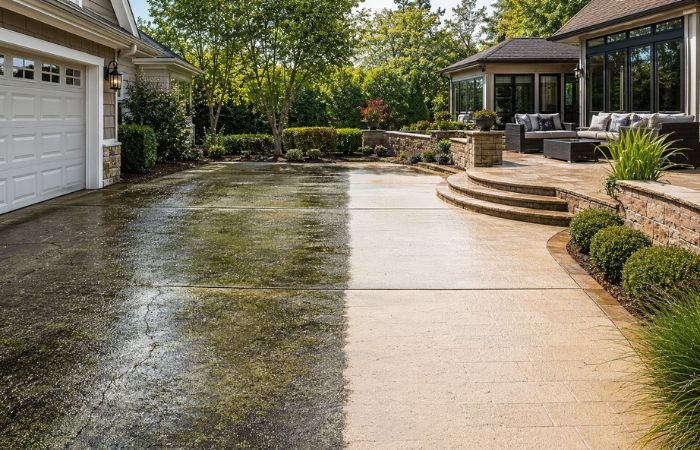
Concrete driveways, stone walkways, brick pavers, and retaining walls look tough — and they are. But they’re not solid all the way through.
Every one of these surfaces is made up of tiny pores and channels, almost like a sponge. That’s exactly why they need more than a quick hose-down every once in a while.
How Dirt Actually Gets “Inside” Your Hardscape
When rain, spilled oil, de-icing salt, or dirt sits on an unsealed driveway or walkway, it doesn’t just stay on top.
It gets pulled down into the material through those tiny pores, a natural process similar to how a paper towel soaks up a spill. Over time, this trapped moisture and grime causes real problems from the inside out.
Salt Buildup Below the Surface
As water evaporates, it leaves mineral deposits behind. Sometimes this shows up as a chalky white haze on top, often called efflorescence.
Other times, salt crystallizes inside the material itself. As those crystals form, they slowly push outward and crack the surface from within, even though everything may still look fine on top.
Freeze-Thaw Damage
Water expands as it freezes. If moisture is trapped inside your concrete or stone when temperatures drop, that expansion creates tiny cracks.
Repeat this cycle every winter, and those small cracks connect and grow. Eventually, the surface starts flaking, pitting, or breaking apart in sheets.
Algae and Moss Damage
Moss, algae, and lichen don’t just look messy. As they grow, they release mild acids that slowly break down the material holding your pavers or concrete together.
The result is a softer, crumblier surface that wears out much faster than it should.
Why a Garden Hose Rinse Isn’t Enough
A quick rinse only cleans what you can see. It clears off surface dust but leaves everything trapped deeper inside completely untouched, including salts, oils, and algae roots.
That’s why driveways and patios that only ever get a light rinse tend to look clean for a week or two, then go right back to staining, growing algae, or developing cracks.
Getting a real, lasting clean means lifting contaminants out of those deeper pores, not just wiping the surface. This typically involves:
- The right combination of water volume and pressure
- Even, consistent coverage to avoid streaky or uneven patches
- Cleaning solutions designed to break down salt and mineral buildup without damaging the material underneath
Simple Ways to Protect Your Hardscape Between Cleanings
You don’t need professional equipment to slow down this kind of damage. A few small habits go a long way:
- Sweep away leaves and organic debris regularly, especially in shaded areas
- Rinse off spilled oil, fertilizer, or de-icing salt as soon as possible
- Avoid using excessive salt on driveways and walkways in winter
- Reseal concrete, pavers, or stone every few years to reduce how much moisture gets in
Warning Signs Your Hardscape Needs Attention
It’s not always obvious that damage is building up beneath the surface. A few common warning signs to watch for include:
- A chalky white residue that keeps returning even after cleaning
- Small hairline cracks that seem to multiply each year
- Patches of concrete or stone that feel soft, sandy, or crumbly to the touch
- Green or black staining that comes back within weeks of cleaning
- Water pooling in the same spot after rain instead of draining away
Catching these signs early usually means a simpler, less expensive fix. Left alone, they tend to turn into cracked slabs, shifting pavers, or crumbling retaining walls.
How Often Should You Clean Your Hardscape?
Most homes benefit from a deep clean once a year, ideally in spring or fall when temperatures are mild. Homes in areas with heavy tree cover, high humidity, or frequent freeze-thaw cycles may need it more often, sometimes twice a year.
If you’re about to reseal a driveway, patio, or walkway, a deep clean beforehand is essential. Sealing over trapped dirt, oil, or moisture traps the problem underneath the new coating, which often causes the seal to fail early.
Why Regional Climate Makes a Difference
Local soil and weather play a bigger role in hardscape wear than most homeowners realize.
Clay-heavy soil, humid summers, and regular freeze-thaw cycles in winter put extra strain on driveways, patios, and retaining walls throughout the year. Skipping proper maintenance in these conditions gives oils, salts, and organic growth more time to work their way deeper into the material.
This is especially true in areas like Spring Hill, TN, where these exact conditions overlap for much of the year.
If your driveway, patio, or retaining wall hasn’t had a real deep clean recently, it may be doing more damage than it looks. Many homeowners get the best results by working with an experienced pressure washing team serving Spring Hill, TN, since professional-grade equipment can lift embedded dirt and salt without stripping or etching the surface, something a standard driveway sprayer usually can’t do safely.
The Bottom Line
Your driveway, patio, and retaining walls represent a real investment in your home. A quick rinse might make them look fine on the surface, but the damage that actually matters happens underneath.
Scheduling a proper deep clean every year or two, especially before sealing any surface, goes a long way toward keeping these features solid, safe, and good-looking for decades instead of years.


