By Denis, Montreal Paysagement Pro (Guest Contributor)
Your front yard is the first thing people see. Whether it’s a neighbor walking their dog, a delivery driver, or a potential buyer pulling up to the curb, that first impression happens in seconds. And here’s what most homeowners get wrong: they think curb appeal is about throwing money at flowers and hoping for the best.
It’s not. The yards that genuinely stand out and boost property value follow specific design principles. I’ve spent enough time planning and building front landscapes to know which trends stick around and which ones fade after a single season on Pinterest.
Let me walk you through what’s working right now.
Native Plants Are Replacing Cookie-Cutter Gardens
The days of planting the same row of boxwood hedges as every other house on the block are winding down. Homeowners are gravitating toward native plants, and there’s a good reason for it. Native species are adapted to your local climate. They need less water and far less maintenance once they’re established.
But here’s the part people miss: native gardens can look incredible when they’re designed with intention. A wildflower meadow sounds romantic until it just looks like an unkempt lawn. The trick is structure. You pair native perennials with clean hardscape edges or a defined pathway, and suddenly that natural look feels deliberate and polished.
From a value standpoint, buyers today are savvy about maintenance costs. A yard that looks great without demanding weekend warrior-level upkeep? That’s a real selling point.
Outdoor Living Spaces Have Moved to the Front
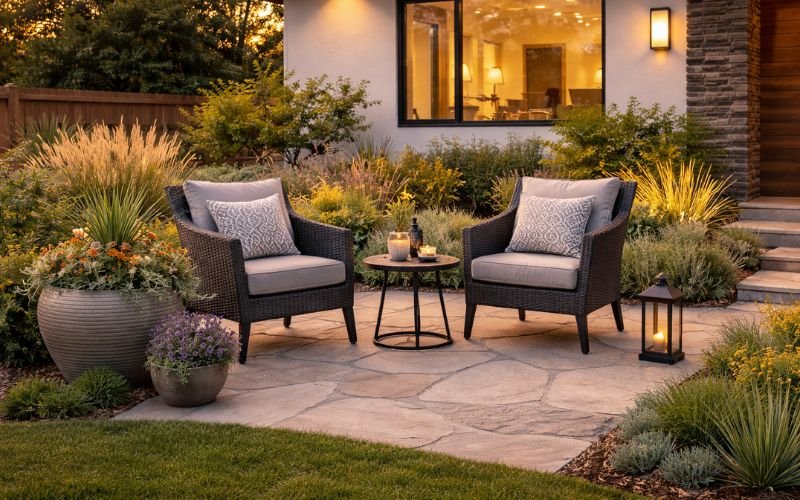
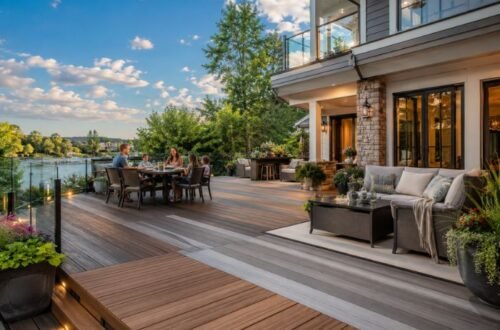
Front porches are making a serious comeback, and so are front-yard seating areas. For a long time, we treated front yards as purely decorative. Everything functional happened in the back. That’s shifting.
I’ve seen more requests for front courtyard designs in the last two years than in the previous ten combined. People want a small patio with a couple of chairs, maybe a low stone wall that doubles as seating during a block party. It makes the home feel welcoming and it gives the street a sense of community.
If you’re thinking about doing this, scale matters. A massive patio in a small front yard looks odd. But a compact flagstone area tucked beside the front walkway, with a planter or two framing it? That hits the right note.
Hardscaping That Does Double Duty
Retaining walls, terraced beds, permeable pavers — these aren’t just pretty. They solve real problems. If your front yard slopes toward your foundation, a well-built retaining wall redirects water and creates planting beds at the same time. Permeable pavers let rainwater soak through instead of pooling on your driveway.
Municipalities in a lot of regions are cracking down on stormwater runoff, so this is one trend driven partly by practicality and partly by regulation. Either way, buyers notice quality hardscaping. A solid stone walkway or a properly graded front yard signals that someone cared about the bones of the property, not just the surface.
One thing I tell people: don’t cheap out on base materials. A paver walkway that shifts and settles after one winter looks worse than no walkway at all. Get the gravel base right, compact it properly, and you’ll have something that lasts decades.
Low-Voltage Landscape Lighting
This one flies under the radar but it makes an outsized difference. Strategic lighting transforms a yard after dark, which is roughly half the time anyone sees your house.
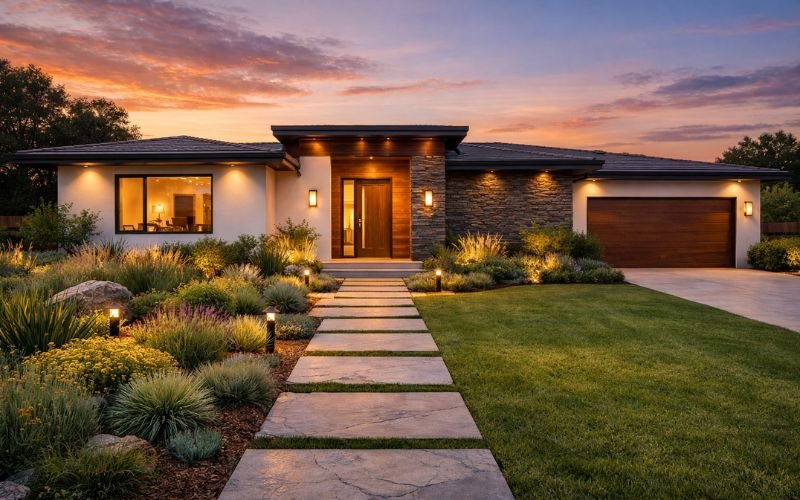
Path lights along a walkway are the obvious starting point. But the real magic happens with uplighting on trees and wash lighting along a textured stone wall. It creates depth and shadow that make a simple landscape feel dramatic.
Low-voltage LED systems are affordable to run and straightforward to install. You don’t need an electrician for most setups. And from a safety perspective, a well-lit front yard is a practical upgrade that appraisers and buyers both appreciate.
Drought-Tolerant Doesn’t Mean Desert-Looking
Even in regions that get decent rainfall, water-wise landscaping is trending upward. Partly it’s environmental awareness. Partly it’s people realizing they don’t want to spend July dragging sprinklers around the lawn.
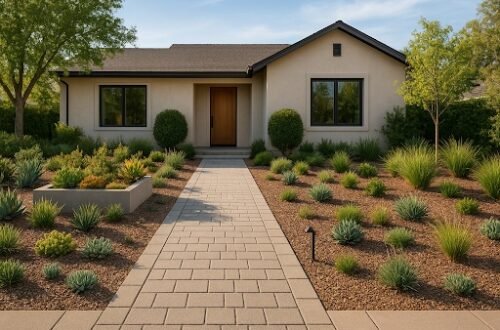
The misconception is that drought-tolerant landscaping means gravel and cacti. It doesn’t. Ornamental grasses, sedum, lavender, Russian sage — these plants thrive with minimal irrigation and still bring real visual interest to a front yard. Pair them with a few evergreen shrubs for year-round structure and you’ve got a landscape that performs in every season.
I’ve worked on landscape design (https://www.montrealpaysagementpro.com/en/services/landscape-design) projects where the entire front yard was converted from traditional turf to a drought-adapted garden. The water savings are significant, but what surprises people most is how much better it looks than the lawn it replaced.
Edible Landscaping Is Gaining Ground
This one might raise eyebrows in a curb appeal article, but hear me out. Fruit trees, blueberry bushes, herb borders — these can be gorgeous in a front yard when they’re planned properly. A dwarf apple tree has beautiful spring blossoms and fall fruit. A row of blueberry bushes turns crimson in autumn.
The key is treating edibles as design elements first. Place them where you’d put any ornamental. Prune them with the same care. Nobody driving by will know your hedge is actually producing pounds of blueberries unless you tell them.
It’s a small but growing trend, and it appeals to the crowd that values sustainability and self-sufficiency. In the right neighborhood, it’s a genuine differentiator.
Defined Entryways Create Visual Flow
Your front door is the focal point of your home’s exterior. Everything in the front yard should guide the eye toward it. That sounds simple, but a surprising number of homes have front landscapes that fight the architecture instead of complementing it.
A clear, generous walkway is step one. Flanking it with low plantings that increase in height as they move toward the house creates a natural sense of arrival. If you have columns or a porch overhang, containers with seasonal color can tie the landscape to the structure.
The homes that photograph best for listings — and that feel best to approach in person — have this sense of intentional flow. Your eye knows where to go. Nothing competes for attention. It’s professional landscaping (https://www.montrealpaysagementpro.com/) thinking applied to a residential scale, and it works every time.
What This All Adds Up To
Curb appeal isn’t one thing. It’s a combination of smart plant choices, functional hardscaping, good lighting, and a design that guides people toward your front door. The trends above aren’t gimmicks. They reflect a shift toward landscapes that look great, work with the local environment, and hold up over time.
If you’re planning a front yard refresh, pick the two or three ideas from this list that fit your property and your budget. You don’t need to do everything at once. A well-designed walkway with some native plantings and a couple of uplights can completely change how your home presents itself from the street.
And that change shows up in more than just compliments from the neighbors. It shows up in your home’s value.