

Leaking pipes are one of the most common plumbing problems in homes and industrial systems. Even a small leak can lead to water damage, higher utility bills, and costly repairs. One of the simplest and most effective ways to prevent these issues is by using the right pipe thread sealant.
Pipe thread sealants are designed to fill the tiny gaps between threaded pipe connections, ensuring a tight, leak-proof seal. Whether you are working on a DIY plumbing project or handling professional installations, understanding how these sealants work can save you time, money, and frustration.
What Is Pipe Thread Sealant?
A pipe thread sealant is a material used to seal threaded pipe connections and prevent leaks. It fills microscopic gaps between male and female threads, creating a pressure-resistant barrier that blocks liquids or gases from escaping.
Unlike adhesives, these sealants do not permanently bond pipes together. They act as a seal and a lubricant, allowing easier assembly and future disassembly when needed.
Used in:
- Residential plumbing
- Gas lines
- HVAC systems
- Industrial piping
How Does Pipe Thread Sealant Work?
Threaded joints are not perfectly airtight. Tiny gaps allow leakage under pressure.
Sealants work by:
- Filling voids between threads
- Creating a leak-proof barrier
- Reducing friction during tightening
- Preventing corrosion
PTFE-based sealants are also hydrophobic, meaning they repel water and improve sealing performance.
Types of Pipe Thread Sealants

PTFE Tape (Teflon Tape)
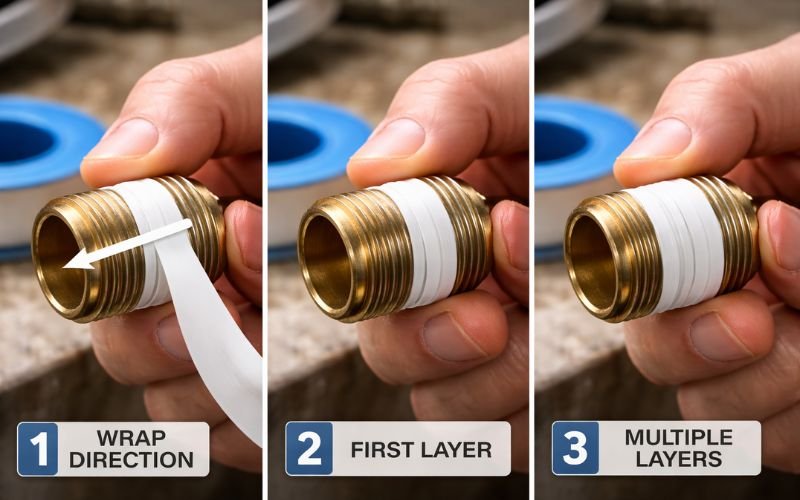
PTFE tape is a thin sealing tape wrapped around threads before assembly.
Key features:
- Easy and clean application
- Provides lubrication
- Works for water, air, and gas
Standard color coding:
- White: Water and general plumbing
- Yellow: Gas lines
- Green: Oxygen systems (oil-free)
Note: Pink/red tapes exist but are not universally standardized; always check manufacturer specifications.
Pipe Dope (Thread Sealant Paste)
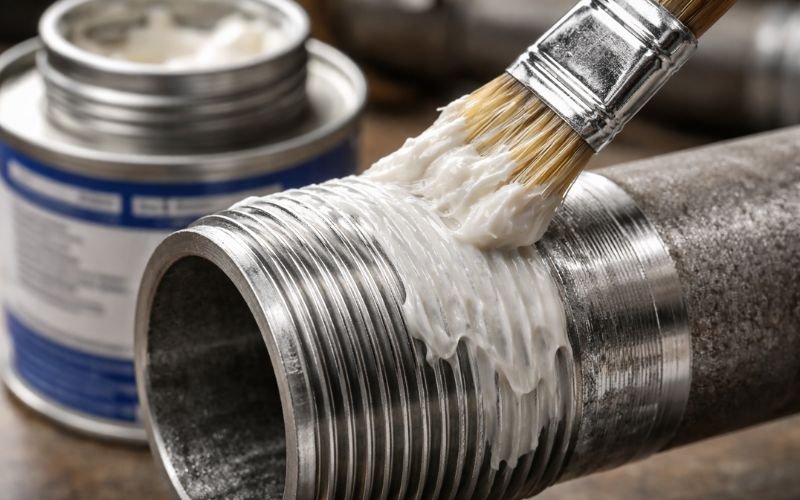
A thick paste applied directly to threads.
Key features:
- Strong sealing capability
- Better for high-pressure systems
- Works well on metal and plastic threads
Typical performance:
- Temperature range: up to 400°F (204°C) depending on product
- Pressure: up to 10,000 PSI (liquids)
Anaerobic Thread Sealants
These sealants cure in the absence of air.
Key features:
- Strong, vibration-resistant seal
- Ideal for industrial use
- Chemical and corrosion resistant
Typical specs:
- Initial set: 10–20 minutes
- Full cure: up to 24 hours
- Temperature range: -65°F to 300°F
Commonly used in high-pressure systems and machinery.
Liquid Thread Sealants
Advanced liquid formulas designed for fast application and sealing.
Key features:
- Quick curing
- High vibration resistance
- Used in mechanical systems
These are less common for DIY and more suited for specialized applications.
PTFE Tape vs Pipe Thread Sealant
| Feature | PTFE Tape | Pipe Dope |
| Ease of use | Very easy | Moderate |
| Cleanliness | Clean | Messy |
| Pressure handling | Medium | High |
| Best use | DIY repairs | Heavy-duty/pro use |
| Plastic compatibility | Limited | Bette |
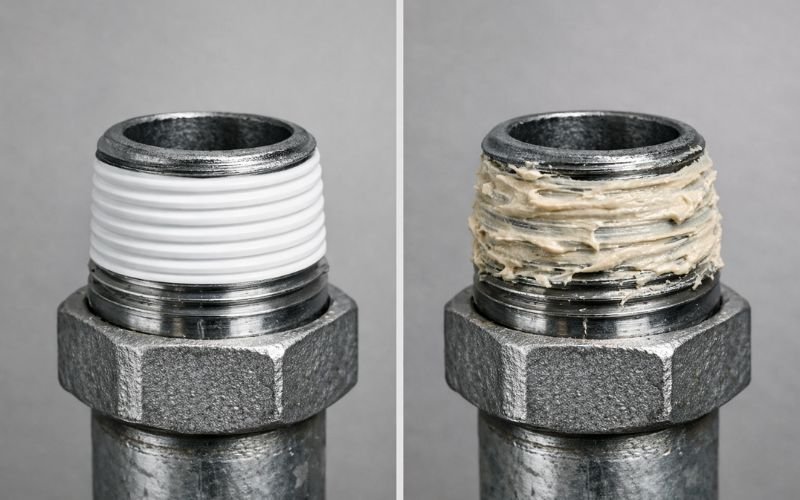
Pro Tip: Professionals sometimes use both together for extra sealing in critical joints.
How to Choose the Right Pipe Thread Sealant
Pipe Material
- Metal: PTFE, anaerobic, or pipe dope
- Plastic/PVC: Pipe dope preferred (tape alone may not seal perfectly)
Temperature Resistance
Choose sealants rated for your system’s temperature range.
Pressure Rating
High-pressure systems require industrial-grade sealants.
Type of Fluid
- Water: Standard PTFE or dope
- Gas: Yellow PTFE or gas-rated dope
- Chemicals: Specialized sealants
Ease of Removal
- PTFE: Easy removal
- Anaerobic: Semi-permanent
How to Apply Pipe Thread Sealant
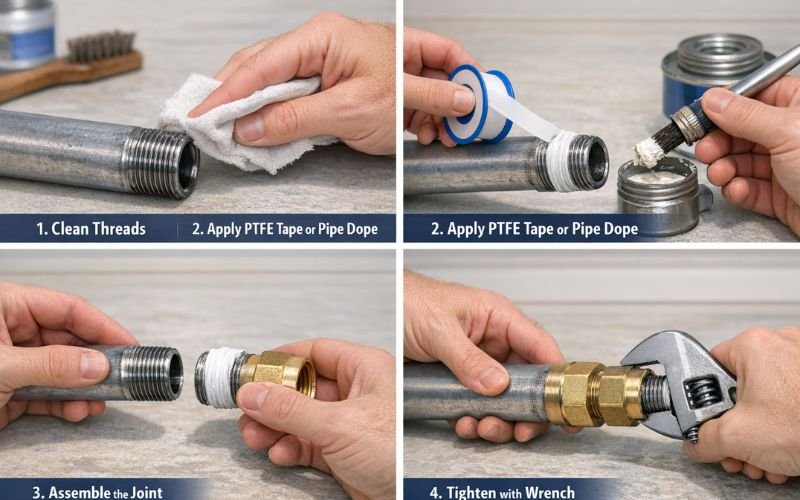
Method 1: Using PTFE Tape
- Clean threads thoroughly
- Start wrapping from the second thread (avoid the first thread to prevent contamination)
- Wrap clockwise
- Apply 3–6 tight wraps
- Press tape into threads
- Assemble and tighten
Method 2: Using Pipe Dope
- Clean and dry threads
- Apply a thin, even layer to male threads
- Avoid applying on the first thread
- Assemble and tighten
- Wipe off excess
Safety Tip: Use gloves and ensure proper ventilation when working with chemical sealants.
Common Mistakes to Avoid
- Wrapping tape in the wrong direction
- Over-applying sealant
- Using sealant on dirty or wet threads
- Applying on the first thread (can contaminate system)
- Using the wrong sealant for gas lines
- Using only tape on plastic threads
Best Pipe Thread Sealants in 2026
Here are some top-performing products based on reliability, reviews, and industry use:
Best Overall
Oatey Great White Pipe Joint Compound
- Multi-purpose sealant
- Works on metal and plastic
- Temperature resistant up to 400°F
- Excellent for both DIY and professional use
Best for Gas Lines
Oatey Yellow PTFE Gas Line Tape
- Designed specifically for gas systems
- High density for better sealing
- Meets safety standards
Best for High Pressure
RectorSeal #5 Pipe Thread Sealant
- Industry-trusted formula
- Handles high pressure and temperature
- Suitable for water, steam, and gases
Best Industrial Option
Henkel Loctite 567 Thread Sealant
- Anaerobic formula
- Excellent for vibration resistance
- Ideal for hydraulic and industrial systems
Best Budget Option
Standard White PTFE Tape
- Affordable and widely available
- Best for basic household repairs
FAQs
What is the best pipe thread sealant for leaks?
For most household leaks, PTFE tape works well. For stronger sealing or high pressure, pipe dope like RectorSeal #5 is more effective.
Can I use Teflon tape on gas pipes?
Yes, but only yellow PTFE tape designed for gas lines should be used.
Is pipe thread sealant permanent?
Most are not permanent. However, anaerobic sealants create stronger, semi-permanent seals.
How many wraps of PTFE tape should I use?
Typically, 3–6 wraps are enough for a proper seal.
Can you use both tape and pipe dope together?
Yes, professionals often combine both for extra sealing in critical applications.
Can you use thread sealant on plastic pipes?
Yes, but pipe dope is recommended over tape alone for better sealing on plastic threads.
How do you remove pipe thread sealant?
PTFE tape can be removed easily. For paste or anaerobic sealants, use tools, heat, or solvents if needed.
Conclusion
Pipe thread sealant is essential for preventing leaks and ensuring long-term reliability in plumbing systems. From simple PTFE tape to advanced anaerobic sealants, each type serves a specific purpose depending on the application.
Choosing the right sealant involves understanding pipe material, pressure, temperature, and fluid type. Proper application techniques and avoiding common mistakes are just as important as selecting the right product.
With the right approach and high-quality sealant, you can achieve durable, leak-free connections in any plumbing system.