
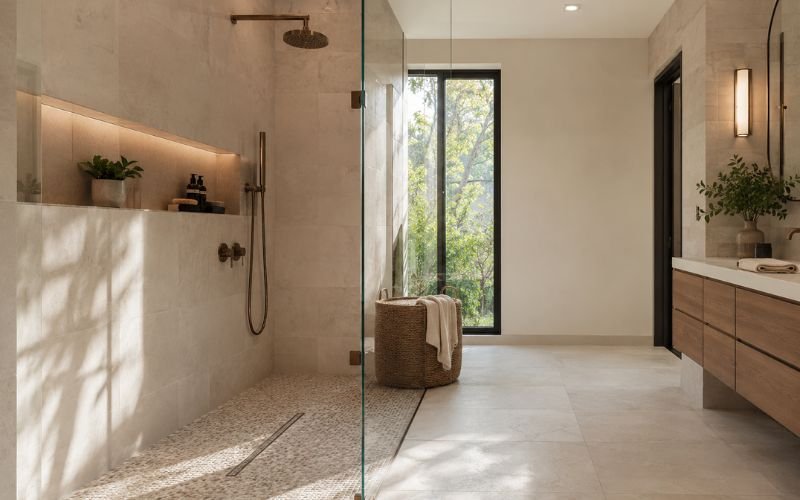
A beautiful shower floor can fail in a very practical way: it can feel unsafe the moment soap, water, and bare feet meet the surface. That is why choosing shower floor tile is not the same as choosing wall tile.
The floor has to drain, grip, clean well, and work with the slope of the shower pan, all while still supporting the design direction of the bathroom.
For homeowners, the biggest mistake is often starting with the look first.
Marble effect.
Zellige texture.
Oversized porcelain.
A warm cement pattern.
All of those can be beautiful, but a shower floor is a wet, sloped, high-use surface. The best tile is not simply the prettiest tile in the showroom. It is the one that matches the application.
Start with slip resistance, not just style
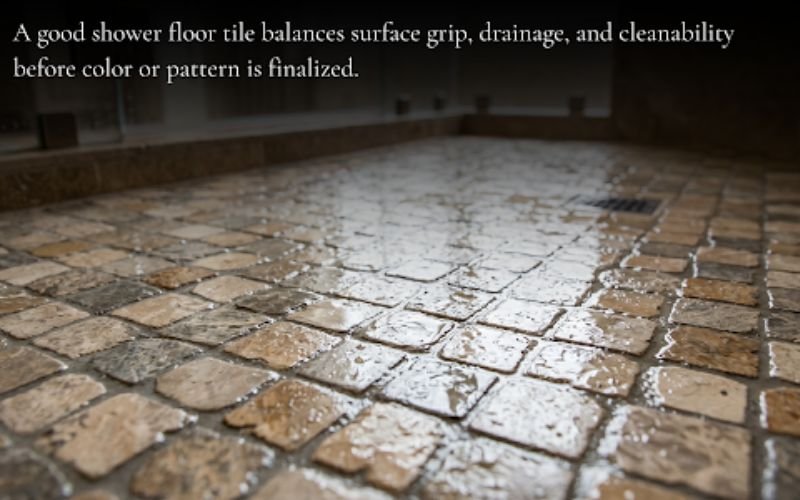
Slip resistance is usually discussed through DCOF, or Dynamic Coefficient of Friction.
TCNA explains that ANSI A326.3 uses product classifications such as Interior Wet and Interior Wet Plus, and that Interior Wet may be based on a wet DCOF of 0.42 or manufacturer declaration. TCNA also notes that specifiers should consider use, traffic, contaminants, maintenance, expected wear, and manufacturer guidance, not DCOF alone.
One simple rule: do not buy a tile for a shower floor unless the manufacturer or retailer clearly says it is suitable for that use. “Bathroom tile” is not specific enough. “Floor tile” is not always specific enough either.
You want language that confirms shower floor, interior wet, wet area, or an equivalent manufacturer-approved application.
Finish for bathroom remodel matters too.
Polished and glossy surfaces may look refined on walls, but they are often the wrong instinct underfoot.
Matte, honed, textured, cement, slate, and certain mosaic formats usually offer better practical footing, though every product still needs to be checked against its specifications.
Size matters more than homeowners expect
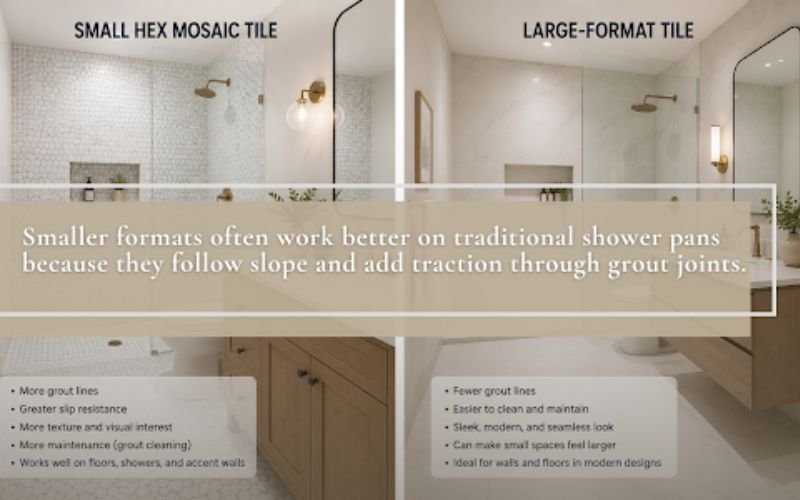
The format of the tile changes how the shower floor performs. Traditional shower floors are sloped toward a drain, often in more than one plane.
The Ceramic Tile Education Foundation notes that a stall shower floor is commonly required to slope one quarter inch per foot toward the drain, and that the floor must avoid low spots that hold water.
This is why small-format tile has remained so common for shower floors. One-inch, two-inch, penny, hex, small square, and small mosaic sheets can follow the pitch of the pan more easily than large-format tile. The extra grout lines also create more texture underfoot.
Large-format tile can work in some showers, especially with a linear drain and a single-plane slope, but it is less forgiving. It may require envelope cuts, more precise substrate preparation, and an installer who understands how to avoid lippage and standing water.
A homeowner who chooses a 12 x 24 tile for a center-drain shower because it looks clean may end up with awkward cuts, poor drainage, or a floor that feels slick despite being matte.
How to compare brands and collections
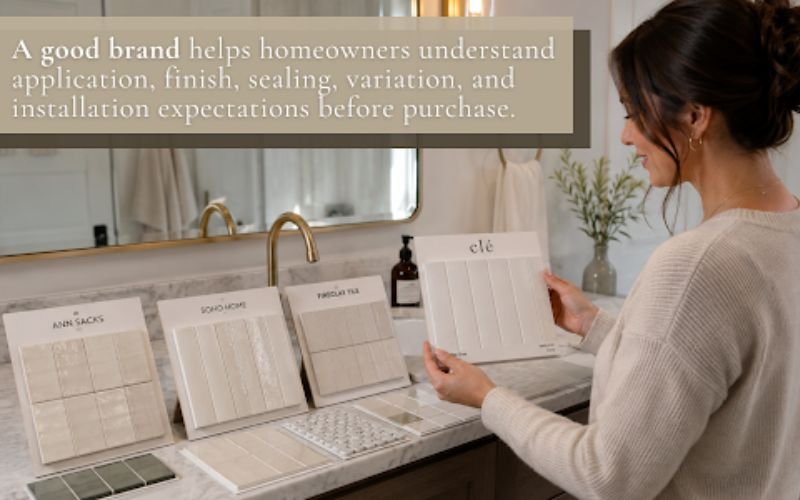
The right brand is not just the one with the most attractive product photography. It is the one that helps you understand where the tile can be used and how it should be installed.
clé is a strong option for design-forward homeowners who want a wider range of expressive wet-area materials. Homeowners comparing finishes, formats, and maintenance needs can review non-slip shower floor tile from clé to see options across cement, stone, slate, terrazzo, mosaics, and handmade-look surfaces. That range is useful because it lets the floor become part of the design language rather than an afterthought, while still keeping practical shower-floor performance at the center of the decision.
A cement pattern can anchor a colorful bathroom. A honed stone mosaic can soften a spa-like primary bath.
A slate mosaic can make a shower feel grounded and architectural. The key is not choosing the most dramatic product, but choosing the one whose finish, format, and maintenance requirements match the shower.
Other brands and retailers may be better for straightforward porcelain mosaics, budget-friendly options, or highly technical commercial slip-resistant surfaces.
The larger point is to compare the specification sheet, not just the image. Look for shower floor approval, DCOF or product use classification, finish, material, sealing requirements, thickness, variation rating, and installation notes.
The best materials for non-slip shower floors
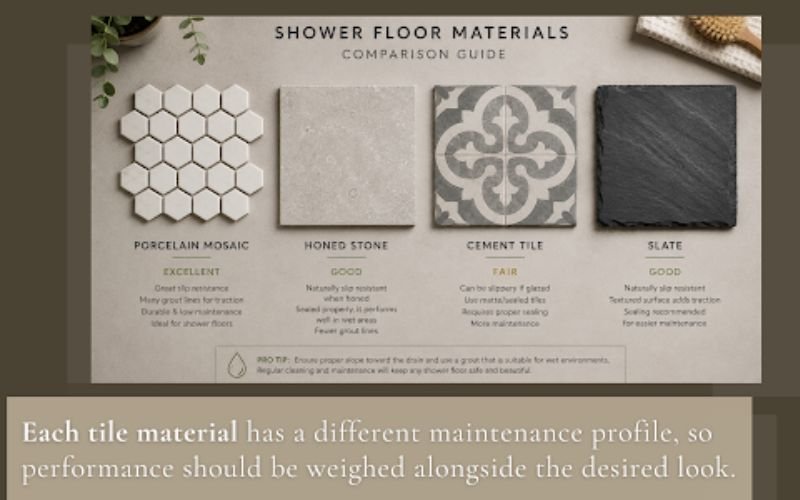
Porcelain mosaic is often the most practical all-around choice. It is dense, widely available, relatively easy to maintain, and comes in many colors, shapes, and finishes. If you are looking for safe ground and want the safest middle ground, a matte porcelain mosaic with manufacturer-confirmed shower floor suitability is usually a strong place to start.
Cement tile can also be compelling for shower floors because of its matte, tactile surface and strong design presence. clé, for example, states that its cement tiles are water resistant, easy to clean and seal, and suitable for showers and steam rooms.
The brand also says cement tiles can be a good choice for shower or bathroom floors because they offer a more slip-resistant surface than glazed tiles while still delivering color.
That said, cement tile is not a no-maintenance choice. It needs proper sealing, pH-neutral cleaning, and an installer who understands cement tile behavior. Homeowners should not treat it like standard glazed ceramic.
Natural stone can be beautiful, especially honed marble, limestone, slate, or mosaic stone. But stone varies widely.
Some stones are porous, some require frequent sealing, and some are more vulnerable to staining, etching, or soap buildup.
Slate and textured stone may offer strong grip, while polished marble is usually better reserved for walls or dry-zone floors.
Zellige and glossy handmade tiles should be approached carefully on shower floors. Their variation is part of their charm, but glossy glaze, irregular thickness, and installation complexity can create challenges underfoot. They often shine best on shower walls, niches, and feature surfaces, while the floor uses a compatible matte or mosaic tile.
Common mistakes homeowners make
The first mistake is choosing wall tile for the floor. A product can be perfect for a shower wall and completely wrong for the floor. Always check the stated application.
The second mistake is assuming “matte” automatically means non-slip. Matte is usually better than polished, but texture, DCOF classification, grout joint density, soap exposure, and drainage all matter.
The third mistake is ignoring grout. Homeowners often want fewer grout lines because they think grout means more cleaning. On shower floors, grout lines can support traction and help small tile follow the slope. The answer is not eliminating grout, it is choosing the right grout color, joint size, and maintenance routine.
The fourth mistake is forgetting waterproofing. Tile and grout are finishes, not the full waterproofing system. TCNA’s shower guidance emphasizes waterproof membrane and backing decisions in wet areas, and notes that manufacturer recommendations and local code interpretations matter.
The fifth mistake is not ordering samples. A wet-area floor should be tested with bare feet, water, and real bathroom lighting before a full order is placed. Samples also reveal sheen, texture, color variation, and whether a tile feels too sharp, too slick, or too visually busy at floor level.
What to ask before buying
Before placing an order, ask these questions:
- Is this tile approved for shower floor use?
- What is the wet-area or product use classification?
- Does it require sealing before and after grouting?
- Will the format work with my drain type and shower slope?
- How much extra should I order for cuts, breakage, and future repairs?
- Does the installer have experience with this material?
For most shower floors, ordering 10 to 15 percent overage is a sensible starting point, though mosaics, complicated layouts, diagonal patterns, and irregular rooms may require more.
Matching future repairs can be difficult if dye lots or batches change.
Final approval should happen before installation, not after the tile is set. Once the waterproofing is complete and the floor tile is installed, correcting the wrong material choice can become expensive.
The bottom line
A good non-slip shower floor tile is not defined by one number, one finish, or one material. It is a combination of confirmed wet-area suitability, appropriate texture, smart format, reliable drainage, correct waterproofing, and realistic maintenance.
For most homeowners, matte porcelain mosaics remain the safest practical baseline. Cement tile, slate, honed stone, and curated artisanal collections can also work beautifully when the specifications and installation plan support the application. Glossy, polished, oversized, or wall-only tiles should be treated with caution.The best shower floor is the one you do not have to think about every morning. It feels secure underfoot, drains cleanly, wears well, and supports the room’s design both exterior and interior without compromising the basic job of a wet floor: keeping people steady, water moving, and the assembly protected for years.




One comment on “What Makes A Good Non-Slip Shower Floor Tile?”