Leaking basement walls are an indication of moisture intrusion that can affect a home’s structural integrity. Homeowners must evaluate the source of the leak and the available repair methods to remedy the situation. Here is what you need to know to fix leaking basement walls.
Identifying the Signs of Leaking Walls
Knowing when to fix leaking basement walls starts with identifying signs of basement moisture early. These indicators allow homeowners to investigate potential issues before water intrusion becomes more severe. Some of the common signs of leaking basement walls include the following:
- Musty odors in basement areas
- Horizontal or vertical cracks in foundation walls
- Small puddles along the base of the walls
- Water stains on concrete surfaces
- Dark discoloration or damp spots on interior basement walls
- The presence of mold or mildew
Understanding the Causes of Basement Leaks
Leaking basement walls often occur when water collects in the soil around a building’s foundation. After rainfall or snowmelt, this water creates pressure against the walls, allowing moisture to seep inside through cracks or joints where the walls meet the floor. Existing cracks may also expand in winter, letting even more water in during the summer months.
Cracks also form as a structure settles over time. These openings provide pathways for water to move through the walls when the surrounding soil is saturated. The risk of basement leaks grows when older waterproofing systems lose effectiveness.
Improper grading and poor drainage contribute to waterproofing issues as well. If water is not directed away from the foundation, it can accumulate along the perimeter. Over time, this leads to seepage through the basement walls.
Getting a Basement Evaluation
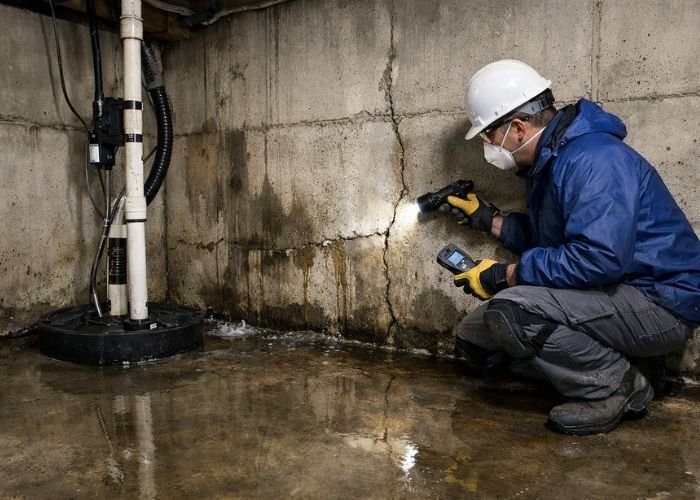
Basement waterproofing typically begins with a thorough inspection of the interior foundation walls. Technicians examine the floors and walls for signs of moisture, such as stains or visible cracks; this assessment helps them identify how water is entering the foundation and whether interior waterproofing will resolve the problem. The process often includes evaluating existing drainage systems. Doing so highlights areas where additional moisture management is needed, supporting a consistently drier basement. Homeowners also gain a clearer understanding of which waterproofing methods are the most suitable for their property.
Finding Comprehensive Waterproofing Services
Interior waterproofing systems are designed to redirect water that enters the basement away from living areas. These systems collect water and channel it toward a sump pump, preventing it from accumulating along the walls or floor. Installation typically involves drainage channels placed along the basement perimeter, which guide water safely away from the foundation.
Once water enters the interior drainage, it is funneled into a sump basin. From there, a sump pump moves the water through a network of pipes to a safe discharge point outside the home. By redirecting water in this way, the system helps reduce pooling and minimizes wall saturation. Many modern sump pumps include battery backups; this allows the system to function even during power outages.
Professionals are able to install interior waterproofing without the need for full excavation, making it less disruptive than exterior solutions. Professionals add vapor barriers over the walls, which channel remaining moisture into the drainage system. Vapor barriers also provide some insulation benefits. This approach is effective for addressing leaks caused by joint seepage, wall cracks, or groundwater pressure.
Fix Leaking Basement Walls Today
Locate the sources of moisture and use suitable interior waterproofing methods to address leaking basement walls. Skilled professionals assist with installing sump pumps and interior drainage systems to help manage water intrusion effectively. Taking steps to control basement leaks will help protect the foundation while creating a drier, more usable space for your home. Contact a trusted waterproofing specialist to explore solutions for your basement today.